OpenAI Turns ChatGPT Into E-Commerce Platform Overnight
Episode Summary
Your daily AI newsletter summary for October 01, 2025
Full Transcript
TOP NEWS HEADLINES
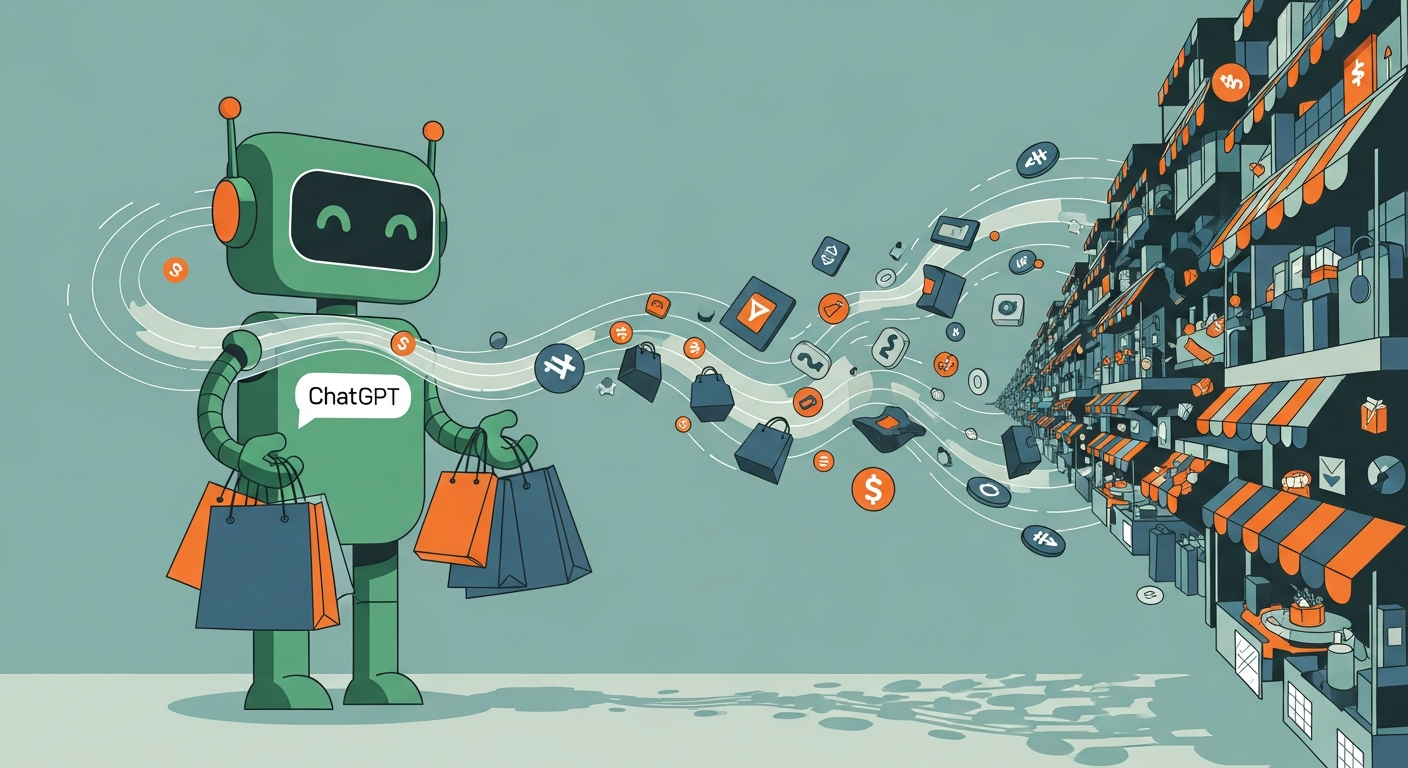
OpenAI just launched Instant Checkout, letting ChatGPT users buy products directly from Etsy and soon Shopify without leaving the conversation - essentially turning the world's most popular AI chatbot into a massive e-commerce platform overnight.
Anthropic fired back with Claude Sonnet 4.5, claiming the title of "world's best coding model" and demonstrating the ability to code autonomously for over 30 hours straight on complex projects - a massive leap from previous AI coding sessions.
Microsoft rolled out "Agent Mode" in their 365 Copilot, transforming it from a helpful assistant into an AI that can handle entire projects independently, from building Excel analyses to creating comprehensive Word documents.
DeepSeek quietly released their V3.2 model with a breakthrough "sparse attention" mechanism that cuts API costs in half while maintaining performance - potentially reshaping the economics of AI deployment.
OpenAI is reportedly preparing a TikTok-style social app powered by Sora 2 that will feature only AI-generated content, with 10-second video limits and the ability to use people's likenesses with their permission.
Electronic Arts just went private in a record-breaking dollar 55 billion leveraged buyout, the largest in history, signaling massive institutional confidence in gaming and digital entertainment assets.
DEEP DIVE ANALYSIS
Let's dive deep into OpenAI's Instant Checkout launch because this represents a fundamental shift in how we think about AI applications and digital commerce. This isn't just another feature - it's OpenAI positioning itself as the next Amazon.
Technical Deep Dive
: The system runs on what OpenAI calls the Agentic Commerce Protocol, built in partnership with Stripe. Here's what's fascinating - they've essentially created a conversational commerce layer that sits between consumers and merchants. When you're chatting with ChatGPT about gift ideas or product recommendations, the AI can now surface relevant products, display them with pricing and reviews, and complete the entire transaction without you ever leaving the conversation.
The technical architecture leverages OpenAI's existing conversation state management, integrates with Stripe's payment processing, and maintains what they call "organic" product ranking based on relevance rather than advertising dollars. They've open-sourced the underlying protocol, which means any merchant can integrate it with minimal code changes.
Financial Analysis
: This is a masterstroke from a business model perspective. OpenAI collects fees on completed transactions - essentially becoming a commission-based marketplace while leveraging their existing infrastructure. With 700 million weekly users, even a small conversion rate could generate billions in additional revenue.
Consider this - Amazon's take rate on third-party sellers ranges from 8 percent to 45 percent depending on the category. If OpenAI captures even a fraction of that market with a competitive fee structure, they've just unlocked a massive new revenue stream that doesn't require training bigger models or buying more compute. For merchants, this could be transformative too - imagine the customer acquisition costs saved by reaching engaged users who are already expressing purchase intent in natural conversation.
Market Disruption
: We're looking at a potential tectonic shift in e-commerce discovery. Google built a trillion-dollar business on search-driven commerce, Amazon dominates transaction completion, but OpenAI is positioning itself to own the entire funnel - from initial product discovery through natural conversation to final purchase. This threatens Google's shopping ads business, Amazon's product discovery monopoly, and traditional e-commerce platforms.
The real disruption comes from changing user behavior - instead of searching for products, users will casually mention needs in conversation and get immediate, actionable suggestions. This could accelerate the shift from destination shopping to ambient commerce.
Cultural and Social Impact
: This represents the mainstreaming of AI agents in daily life. We're moving from AI as a tool you use to AI as an environment you live in. The cultural implications are significant - it normalizes having AI make purchasing suggestions and handle transactions on your behalf.
This could accelerate the adoption of AI agents across all aspects of commerce and daily life. However, there are legitimate concerns about AI influencing purchasing decisions, especially if the "organic" ranking ever shifts toward monetization. We're also seeing the emergence of what researchers call "ambient commerce" - where buying happens seamlessly within other activities rather than as a dedicated shopping session.
Executive Action Plan
: First, if you're running an e-commerce business, you need to evaluate integrating with OpenAI's Agentic Commerce Protocol immediately. The early adopters will likely get better positioning and learn the optimization strategies before this becomes saturated. Second, start thinking about how conversational commerce fits into your customer acquisition strategy - this isn't just another sales channel, it's a fundamentally different way customers will discover and evaluate products.
Third, consider how AI agents might disrupt your own industry beyond commerce - if OpenAI can turn ChatGPT into a shopping platform overnight, what other traditional business models are vulnerable to AI-native approaches? The companies that will thrive in the next decade are those that reimagine their entire value proposition through the lens of AI agents, not just those that add AI features to existing products.
Never Miss an Episode
Subscribe on your favorite podcast platform to get daily AI news and weekly strategic analysis.