OpenAI Plans 125x Compute Expansion, Rivaling India's Energy Use
Episode Summary
Your daily AI newsletter summary for September 29, 2025
Full Transcript
TOP NEWS HEADLINES
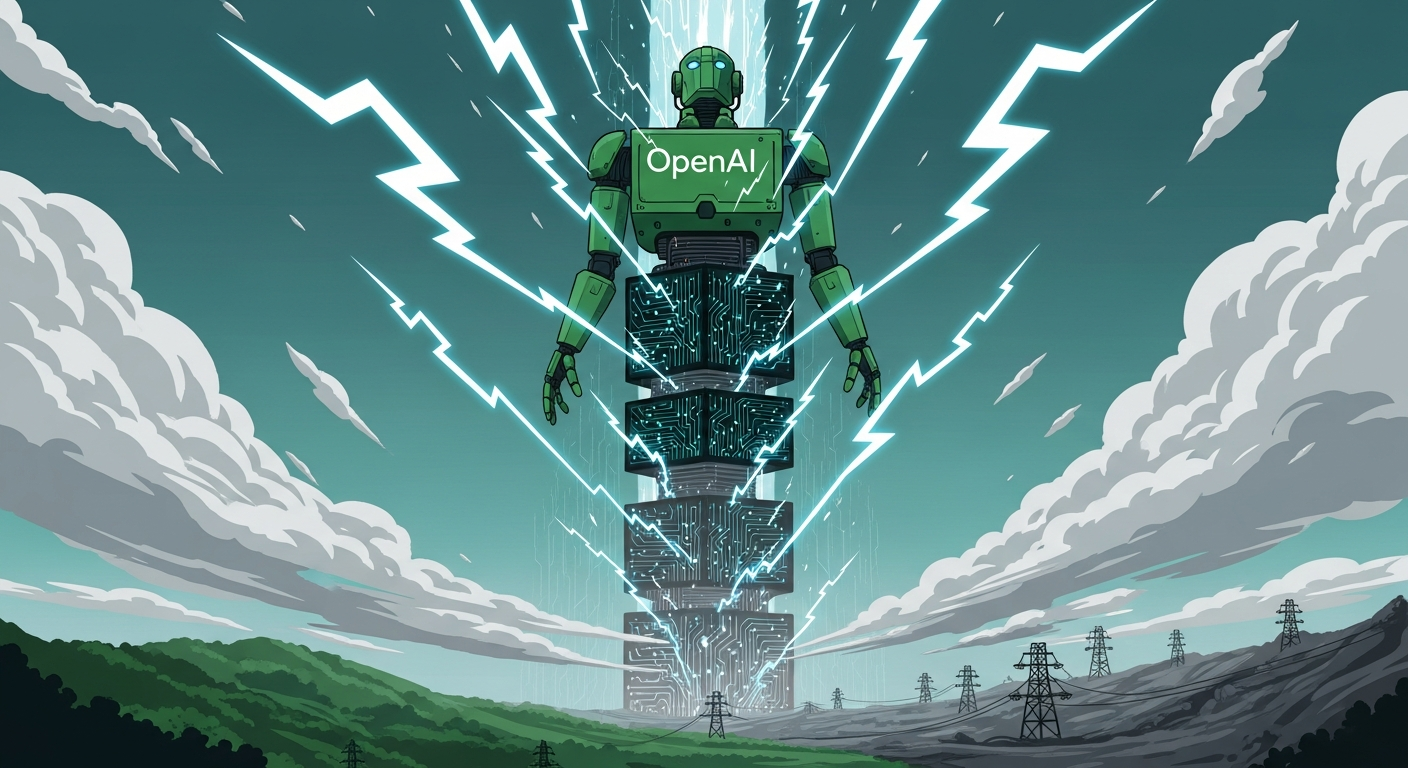
OpenAI is preparing for a massive 125x expansion in compute capacity by 2033, which would put their energy consumption above the entire country of India with its 1.4 billion people.
To put this in perspective, they've already increased their compute capacity ninefold just this year, and this next phase represents an astronomical leap in AI infrastructure investment.
A Turing Award winner and the father of reinforcement learning, Richard Sutton, is calling large language models like ChatGPT a "dead end" for achieving artificial general intelligence.
These models learn to mimic what humans would say rather than learning from real-world consequences and experience.
Apple has built an internal ChatGPT competitor to test their completely redesigned, "AI-first" Siri that's set to debut next year.
This marks a significant shift for Apple, moving from incremental improvements to a fundamental reimagining of their voice assistant.
Meanwhile, Cloudera's new survey of 1,500 IT executives reveals a critical paradox in enterprise AI: while companies are heavily investing and bullish about AI, only 21 percent have actually achieved full integration into their core business processes.
CoreWeave just expanded their infrastructure deals with OpenAI to a staggering dollar 22.4 billion total, making this partnership central to OpenAI's massive buildout plans.
And Meta launched "Vibes," an AI video feed featuring remixable short clips, as they push deeper into AI-generated content.
DEEP DIVE ANALYSIS
Let's dive deep into OpenAI's mind-bending compute expansion plans, because this story reveals everything about where AI is heading and what it means for the entire technology landscape.
Technical Deep Dive
What we're looking at here isn't just a bigger computer cluster – it's a fundamental reimagining of computational scale. When OpenAI talks about 125x expansion, they're referring to raw processing power measured in FLOPS – floating-point operations per second. But here's where it gets interesting: this 125x figure actually understates the real capability increase because NVIDIA keeps making their chips more efficient.
So we're talking about potentially 300x or 400x more actual AI horsepower. This kind of compute power requires solving problems that have never been solved before. We're talking about managing hundreds of thousands of GPUs working in perfect synchronization, dealing with heat generation that could power small cities, and creating networking infrastructure that can handle data flows measured in exabytes.
The engineering challenges alone represent breakthroughs in distributed systems, cooling technology, and power management that will ripple across the entire tech industry.
Financial Analysis
The financial implications are staggering. Conservative estimates put this infrastructure investment at hundreds of billions of dollars. OpenAI's partnership with CoreWeave, now valued at dollar 22.
4 billion, is just the tip of the iceberg. This represents a fundamental shift in how we think about technology capital expenditures. For context, this single AI company would consume more electricity than India – a country with a GDP of dollar 3.
7 trillion. We're looking at operating costs that could easily exceed dollar 50 billion annually just for power and infrastructure. This forces a complete rethink of AI business models.
The only way these numbers work is if AI becomes so valuable that it justifies energy consumption rivaling entire nations. This also creates a new category of infrastructure company. CoreWeave, essentially a specialized cloud provider for AI workloads, is now critical national infrastructure.
We're witnessing the birth of a new industrial category – AI infrastructure as a service – with valuations and strategic importance that rival traditional utilities.
Market Disruption
This compute arms race is creating unprecedented market consolidation. Only companies with access to massive capital and energy resources can play at this level. We're moving toward a world where AI capability is determined by your ability to secure power contracts and GPU allocation, not just algorithmic innovation.
For established tech giants like Google, Microsoft, and Amazon, this validates their massive cloud infrastructure investments. But it also creates opportunities for new players who can solve the infrastructure puzzle differently. We're seeing entire regions compete to host AI infrastructure, offering tax incentives and guaranteed power access.
The downstream effects are equally dramatic. Every software company will need to decide whether to build AI capabilities in-house or depend on these mega-scale providers. This is creating a new layer of technological dependency that makes the cloud revolution look modest by comparison.
Cultural and Social Impact
We're approaching a inflection point where AI systems consume resources at the scale of nation-states. This raises fundamental questions about resource allocation and priorities. When a single company's AI ambitions require more energy than a country of over a billion people, we're dealing with resource allocation decisions that have geopolitical implications.
The social contract around technology is changing. Previous tech revolutions improved efficiency – computers helped us do more with less. But AI, at this scale, is making a different trade-off: consuming massive resources to potentially solve problems we couldn't tackle before.
Society will need to decide whether breakthroughs in drug discovery, climate modeling, and scientific research justify energy consumption at this scale. There's also the concentration of capability to consider. If only a few organizations can operate at this compute scale, they effectively control the development of artificial general intelligence.
This creates new forms of technological sovereignty that governments are just beginning to understand.
Executive Action Plan
First, completely reassess your AI strategy through the lens of compute dependency. If you're building AI capabilities in-house, understand that you're competing against organizations with nation-state level resources. Consider whether your AI initiatives should focus on specialized applications where massive compute isn't required, or whether you should be building partnerships with these mega-scale providers now, before capacity becomes even more constrained.
Second, evaluate your business model's resilience to AI disruption happening at this accelerated pace. When compute capacity increases by 125x, the rate of AI capability improvement will be unprecedented. Companies that seemed safely ahead of AI disruption may find their advantages eroded within months rather than years.
Develop scenario plans for AI capabilities that seemed years away suddenly becoming available next quarter. Third, consider the infrastructure play itself as a business opportunity. The companies building the picks and shovels for this AI gold rush – from specialized cooling systems to power management to networking infrastructure – may see more predictable returns than AI application companies.
If you have expertise in any aspect of large-scale infrastructure, there's a massive market forming that needs solutions.
Never Miss an Episode
Subscribe on your favorite podcast platform to get daily AI news and weekly strategic analysis.