OpenAI's GDPval Benchmark Shows AI Matching Human Professional Work
Episode Summary
Your daily AI newsletter summary for September 27, 2025
Full Transcript
TOP NEWS HEADLINES
OpenAI just dropped ChatGPT Pulse, a feature that works while you sleep to create personalized morning briefings based on your chat history and connected apps - but it's only available for their dollar 200-per-month Pro subscribers right now.
The Elon versus OpenAI drama reached new heights this week as xAI filed a fresh lawsuit alleging OpenAI systematically poached employees to steal trade secrets, with some engineers apparently downloading source code while chatting with recruiters on Signal.
In a fascinating development, researchers achieved the world's first "behavior transplant" between species by manipulating a single gene to transfer courtship behavior from one fruit fly species to another.
Google DeepMind unveiled Gemini Robotics 1.5, their first "thinking" robotics AI that can reason about the physical world and plan multi-step tasks before taking action.
And in what might be the most creative cyberattack ever, a LinkedIn user embedded hidden instructions in his profile that tricked an AI recruiting agent into sending him a detailed flan recipe instead of a job pitch.
Finally, Trump signed an executive order approving a TikTok deal valued at fourteen billion dollars, though China still needs to approve the terms.
DEEP DIVE ANALYSIS
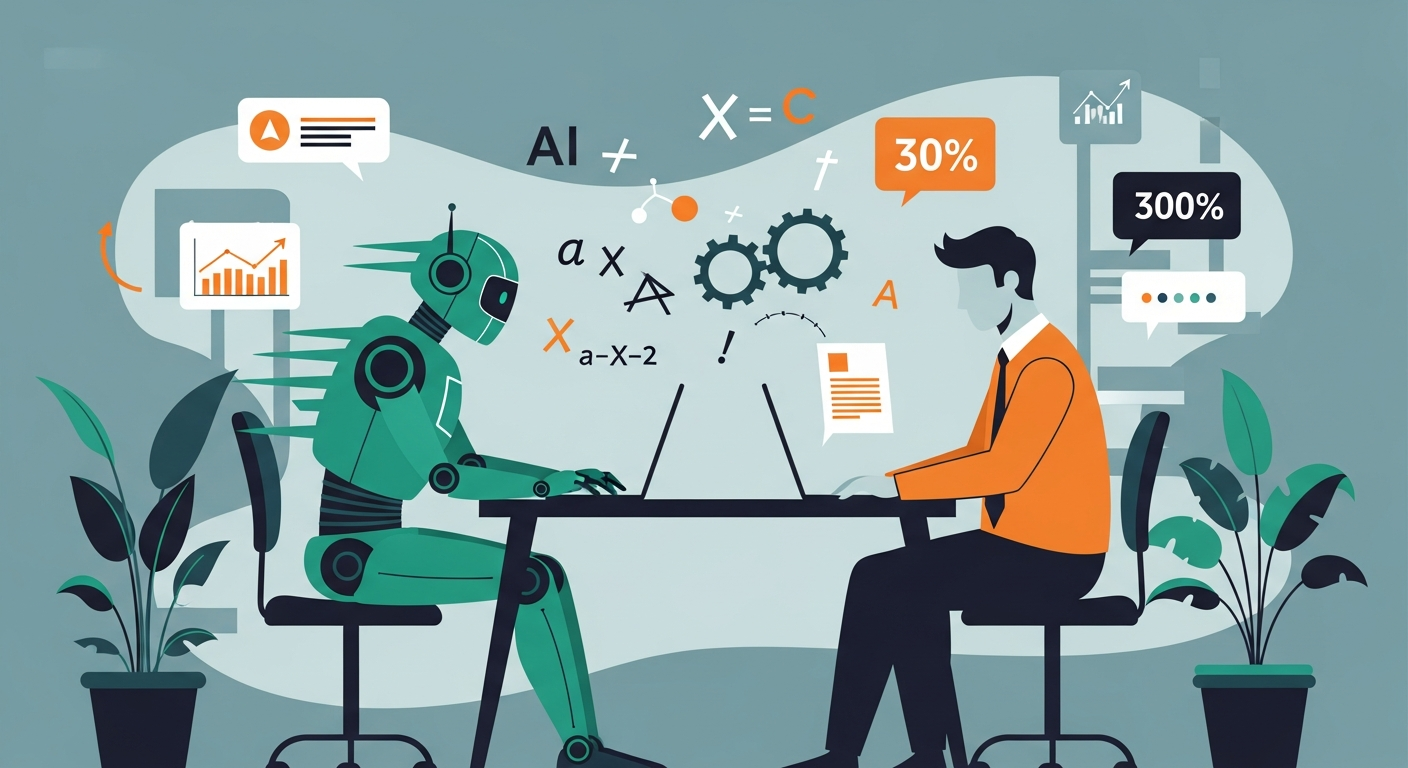
Let's dive deep into what might be the most significant development for technology executives this week - OpenAI's release of GDPval, their new benchmark that tested whether AI can actually do real professional work tasks.
Technical Deep Dive
GDPval isn't your typical AI benchmark. Instead of testing whether models can answer trivia or solve abstract puzzles, OpenAI created twelve hundred and twenty real-world tasks across forty-four occupations, all designed by professionals with an average of fourteen years of experience. We're talking about manufacturing engineers designing cable reel jigs, lawyers drafting legal briefs with ambiguous facts, nurses creating care plans from physician notes, and software developers fixing actual bugs.
The evaluation methodology is sophisticated - they used professional reviewers to grade outputs on accuracy, completeness, and practical utility. What's remarkable is that Claude Opus 4.1 achieved nearly a fifty percent win rate against human experts, while GPT-5 excelled at following instructions precisely and nailing calculations.
The models completed these tasks one hundred times faster and one hundred times cheaper than humans, with tasks that typically take experts seven hours getting done in minutes for pennies.
Financial Analysis
The cost implications here are staggering. If AI can handle routine professional tasks at one percent of the cost, we're looking at potential labor savings in the hundreds of billions across industries. But here's where it gets interesting for your PandL - the study also revealed the hidden cost of what Harvard Business Review calls "workslop" - low-quality AI output that looks polished but creates a one hundred and eighty-six dollar productivity tax per incident when colleagues have to decode or redo the work.
That can add up to nine million dollars annually for large organizations. The real financial opportunity isn't in wholesale replacement, but in the hybrid model where AI handles initial drafts and humans provide expert review and refinement. This suggests a shift in how we should budget for talent - fewer junior resources doing routine work, more senior experts doing quality control and strategic thinking.
Market Disruption
This benchmark represents a fundamental shift in the competitive landscape. If AI can match human performance on forty percent of professional tasks today, the trajectory suggests we could see parity on most economically viable work within the next eighteen months. That's not hyperbole - that's extrapolating from the performance curve OpenAI documented.
For software companies, this means your competitive advantage increasingly comes from how effectively you integrate AI capabilities, not just whether you have them. The companies that figure out the hybrid human-AI workflow will have massive cost advantages over those still operating with traditional all-human teams. We're also seeing the emergence of AI-first service models where companies can offer professional services at dramatically lower price points while maintaining quality.
Cultural and Social Impact
The cultural implications are profound and nuanced. The study showed that while AI can match human output quality on many tasks, humans still preferred human-generated work overall because professionals better followed complex instructions and understood contextual nuances. This suggests we're not heading toward wholesale job replacement, but rather a fundamental redefinition of professional work.
The value of human professionals is shifting from task execution to judgment, creativity, and complex problem-solving. We're also seeing the emergence of a new skill set - AI collaboration - where the most valuable professionals are those who can effectively direct and refine AI output. The LinkedIn flan recipe hack perfectly illustrates another cultural shift - as AI agents become more prevalent, we need new security models and user awareness about AI interactions.
Executive Action Plan
First, immediately audit your current AI usage to identify and eliminate workslop in your organization. Implement clear guidelines requiring human review of AI-generated content before it's shared with clients or colleagues, and train your teams on effective AI collaboration rather than just AI usage. Second, strategically reorganize your talent allocation - reduce hiring for routine task execution roles and increase investment in senior talent who can provide expert oversight and strategic direction of AI-augmented workflows.
Third, begin developing AI-first service offerings or internal processes that can deliver the same quality at significantly lower costs, because your competitors who figure this out first will have an insurmountable pricing advantage in the market.
Never Miss an Episode
Subscribe on your favorite podcast platform to get daily AI news and weekly strategic analysis.