Microsoft Breaks OpenAI Exclusivity with Claude Integration
Episode Summary
Your daily AI newsletter summary for September 26, 2025
Full Transcript
TOP NEWS HEADLINES
Google's DORA report just dropped some eye-opening numbers - ninety percent of developers are now using AI daily, but here's the twist: thirty percent still don't trust what it produces.
They're using it anyway, which tells us everything about where we are in this adoption cycle.
OpenAI accidentally leaked what looks like new "alpha models" in ChatGPT yesterday, briefly showing agent variants with names like "Agent with truncation" and "Agent with prompt expansion" before quickly pulling them back.
This feels like a preview of what's coming with their next major release.
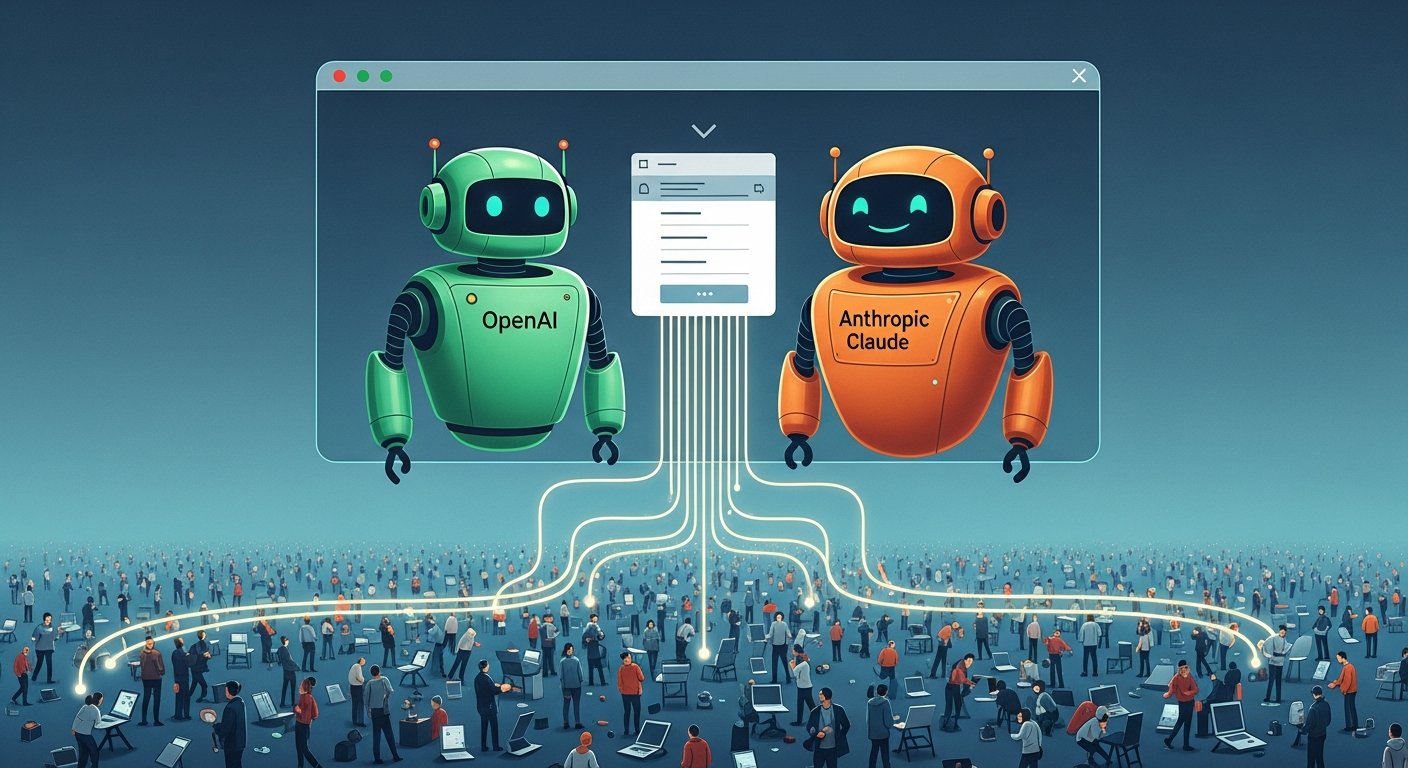
Microsoft just made a massive strategic pivot by adding Anthropic's Claude models directly into Office 365 Copilot, marking the first time they've broken their exclusive OpenAI partnership for their core productivity suite.
Users can now choose between OpenAI and Claude models right in the interface.
Ben Tossell's Factory just hit number one on Terminal Bench, the most challenging coding benchmark out there, after raising fifty million in Series B funding from NEA, Sequoia, and NVIDIA.
They're claiming their agents outperform research lab models by wide margins.
Medicare is piloting an AI system called WISeR starting January 2026 that will automatically screen and potentially deny medical procedures deemed "low-value" - basically bringing private insurance's AI-powered denial tactics to government healthcare.
Meta released their Code World Model, a thirty-two billion parameter model specifically trained on code execution traces, while AI researchers at NYU found that frontier models can now pass all three levels of the CFA exam in minutes versus the thousand hours humans typically need.
DEEP DIVE ANALYSIS
Let's dig deep into that Microsoft-Anthropic partnership because this represents one of the most significant strategic shifts in the AI space this year, and it has massive implications for every technology executive listening.
Technical Deep Dive
What Microsoft has done here is essentially built the first major AI model marketplace inside a productivity suite used by hundreds of millions of people daily. This isn't just adding another chatbot option - they've architected their Copilot system to be model-agnostic at the core. When you're using Microsoft's Researcher agent or building custom agents in Copilot Studio, you now see a dropdown menu where you can switch between OpenAI's models and Claude Sonnet 4 and Opus 4.
1 in real-time. The technical architecture here is fascinating because it required Microsoft to build abstraction layers that can seamlessly route requests to different AI providers while maintaining consistent user experience. Claude runs on Anthropic's servers, not Microsoft's Azure infrastructure, which means they had to solve complex data routing, security, and compliance challenges.
This is enterprise-grade model switching at scale - something no one has attempted before. But here's the really interesting part: this suggests Microsoft has learned that no single model excels at everything. Different models have different strengths - Claude tends to be better at creative writing and nuanced analysis, while OpenAI's models might be stronger at technical tasks.
By letting users choose, Microsoft is acknowledging that the future isn't about finding one perfect AI, but about having the right AI for the right job.
Financial Analysis
From a financial perspective, this move is both defensive and offensive for Microsoft. They're paying Anthropic for Claude usage while still paying OpenAI for their models, which increases their AI infrastructure costs. But they're also reducing their dependency on OpenAI, which has been charging premium rates for API access and has been increasingly positioning itself as a direct competitor to Microsoft.
For Anthropic, this is potentially their biggest distribution win ever. Getting Claude in front of hundreds of millions of Office users could dramatically increase their revenue and market share overnight. We're talking about going from a relatively niche AI assistant to being embedded in the daily workflow of most knowledge workers globally.
The pricing strategy here is telling - companies have to opt-in through their admin center, and there's likely additional cost for Claude access. Microsoft is essentially testing whether enterprises will pay more for AI model choice. If this succeeds, expect to see premium tiers built around model variety rather than just feature access.
This also signals that AI infrastructure costs are becoming more manageable. A year ago, the computational expense of running multiple large models would have been prohibitive for most companies. The fact that Microsoft can casually offer model switching suggests that either costs have dropped significantly, or they're confident that enterprise customers will pay enough to justify the expense.
Market Disruption
This completely reshapes the competitive landscape. OpenAI just lost exclusive access to Microsoft's productivity suite, which has been one of their biggest strategic advantages. Sam Altman has to be looking at this as a direct threat to OpenAI's enterprise ambitions.
For Google, this is both good and bad news. Good because it validates their multi-model approach with Gemini, but bad because Microsoft just leapfrogged them in offering enterprise customers real AI choice. Google Workspace users are still locked into Gemini models only.
But the bigger disruption is what this means for AI model providers. Microsoft just created the template for how large platforms can avoid vendor lock-in. Every major software company is now going to be asking themselves: "Should we be building model-agnostic systems?
" The answer for most is probably yes, which means AI companies are about to face much more commoditized competition. This also accelerates the "model as a service" trend. Instead of companies building exclusive partnerships with one AI provider, we're moving toward a world where AI models compete on performance and price in real-time marketplaces.
That's great for innovation but potentially devastating for AI companies that can't consistently outperform competitors.
Cultural and Social Impact
What we're witnessing is the democratization of AI model choice at the consumer level. Most people using AI today have never compared different models side by side. When you put Claude and GPT-4 in the same interface and let people switch between them, you're essentially educating hundreds of millions of users about the nuances between AI systems.
This is going to accelerate AI literacy dramatically. Users will start to understand that Claude might be better for writing that important email while GPT-4 might be better for analyzing their quarterly reports. We're moving from "AI is magic" to "AI is a tool, and different tools are better for different jobs.
" There's also a fascinating psychological aspect here. Choice architecture research tells us that when people have options, they feel more in control and are more likely to trust the system. By giving users model choice, Microsoft isn't just improving functionality - they're improving user acceptance and reducing AI anxiety.
But this also creates new challenges. Decision fatigue is real, and now users have to think about which AI model to use for each task. We'll probably see the emergence of AI model recommendation systems - meta-AI that helps you choose which AI to use.
Executive Action Plan
First, audit your current AI vendor relationships immediately. If you're locked into exclusive deals with single AI providers, you need to renegotiate for model flexibility or at least build escape clauses into future contracts. Microsoft just proved that multi-model approaches work at enterprise scale, so there's no technical excuse for vendor lock-in anymore.
Second, start experimenting with model comparison workflows in your organization. Don't just deploy one AI tool company-wide and call it a day. Set up pilot programs where different teams can test different models for their specific use cases.
Document what works best for what tasks, because this knowledge is going to become a competitive advantage. Third, if you're building AI-powered products, architect for model agnosticism from day one. Your customers are going to start expecting choice, and if you can't provide it, someone else will.
Build abstraction layers that let you swap models without rebuilding your entire product. The companies that can seamlessly integrate new AI models as they emerge are going to have massive advantages over those locked into single providers.
Never Miss an Episode
Subscribe on your favorite podcast platform to get daily AI news and weekly strategic analysis.