OpenAI Launches GPT-5 Codex for Autonomous Seven-Hour Coding
Episode Summary
Your daily AI newsletter summary for September 17, 2025
Full Transcript
TOP NEWS HEADLINES
OpenAI just dropped GPT-5 Codex, a specialized coding model that can work autonomously for up to seven hours on complex programming tasks - marking a significant leap in AI-powered software development capabilities.
Google released VaultGemma, the world's most capable differentially private language model, addressing one of AI's biggest challenges by protecting user data while maintaining performance at scale.
Gamma's founders revealed how they scaled from zero to fifty million in annual recurring revenue in under two years using systematic influencer marketing rather than traditional performance advertising - proving there's still room for creative growth strategies in the AI boom.
Harvard Medical School unveiled PDGrapher, an AI system that can identify gene and drug combinations to reverse diseased cells back to healthy states, potentially accelerating drug discovery by decades.
The latest usage data from OpenAI and Anthropic reveals a surprising trend - seventy-three percent of ChatGPT conversations are now personal rather than work-related, while AI adoption in developing countries is growing four times faster than in wealthy regions.
Meanwhile, China's researchers published breakthrough results with SpikingBrain, a brain-inspired AI system running entirely on domestic chips that processes information one hundred times faster than traditional models.
DEEP DIVE ANALYSIS
Let's dive deep into OpenAI's GPT-5 Codex announcement because this represents a fundamental shift in how we think about AI-assisted software development.
Technical Deep Dive
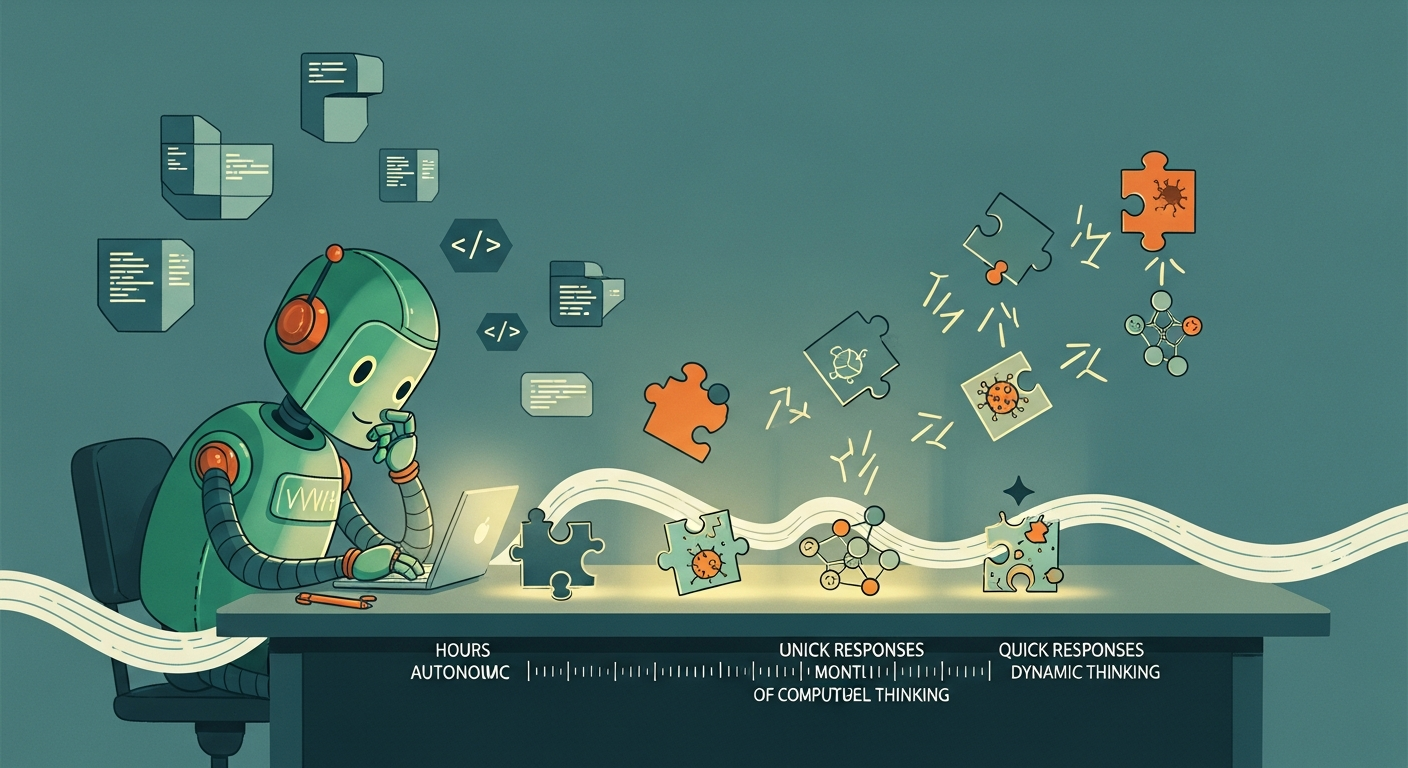
GPT-5 Codex isn't just another incremental update - it's a complete rethinking of how AI coding assistants should work. The breakthrough here is dynamic compute allocation. Unlike previous models that use fixed processing time regardless of task complexity, GPT-5 Codex intelligently adjusts its "thinking time" based on what you're asking it to do.
For simple tasks like "What folder are we in?" it responds instantly. But for complex refactoring projects or multi-file system architecture changes, it can work autonomously for hours - we're talking up to seven hours of continuous problem-solving.
This isn't just faster processing; it's a qualitatively different approach that mirrors how human developers actually work on problems of varying complexity. The model also introduces seamless handoffs between local development environments and cloud execution. You can start a coding task in VS Code, hand it off to OpenAI's servers, and it continues working even when your laptop is closed.
This addresses one of the biggest friction points in AI coding - the limitation of local compute resources.
Financial Analysis
From a financial perspective, this represents OpenAI's aggressive push to capture the enterprise developer market. The coding tools market is exploding - Cursor just surpassed five hundred million in annual recurring revenue, and Microsoft's GitHub Copilot has millions of paid subscribers. OpenAI's revenue sharing with Microsoft is dropping from twenty percent to eight percent by twenty thirty, potentially saving them fifty billion dollars.
This gives them enormous runway to price GPT-5 Codex competitively while still maintaining healthy margins. The dynamic compute model is also financially brilliant. Instead of charging fixed rates regardless of complexity, they can optimize resource usage - quick tasks use minimal compute, complex tasks justify higher costs.
This creates a sustainable economic model for truly powerful AI assistance. For enterprises, the value proposition is compelling. If GPT-5 Codex can handle complex refactoring tasks that typically take senior developers days or weeks, even at premium pricing, the ROI is obvious.
Market Disruption
This puts enormous pressure on Anthropic's Claude Code and other competitors. While Claude has been the preferred choice for many developers, GPT-5 Codex's ability to work for hours autonomously changes the competitive landscape entirely. We're seeing the emergence of "agentic coding" - where AI doesn't just assist but actually performs extended development work independently.
This could fundamentally reshape software development teams. Instead of replacing developers, it's creating a new category of human-AI collaboration where developers become more like architects and project managers, with AI handling much of the implementation work. The broader implications extend beyond individual productivity.
Software development timelines could compress dramatically. Product iteration cycles that currently take weeks might happen in days. This could accelerate innovation across every industry that depends on software.
Cultural and Social Impact
This technology is creating a new divide in the developer community. We're seeing the emergence of "vibe coding" - a more intuitive, business-logic-driven approach to programming that's less about syntax mastery and more about understanding requirements and system design. Experienced developers are split.
Some see this as democratizing programming, allowing people to build complex systems without years of syntax memorization. Others worry about code quality, debugging nightmares, and the loss of deep technical understanding. The global implications are significant too.
The usage data showing four times faster AI adoption in developing countries suggests we might see a new wave of software innovation from regions that can leapfrog traditional coding education and go straight to AI-assisted development.
Executive Action Plan
First, if you're running a technology company, you need to evaluate your development team structure immediately. Consider running pilot programs with GPT-5 Codex on non-critical projects to understand how it changes your development velocity and code quality. The teams that figure out human-AI collaboration in coding will have a massive competitive advantage.
Second, rethink your technical hiring strategy. The skills that matter are shifting from syntax mastery to system design, architecture thinking, and the ability to effectively communicate requirements to AI systems. Start incorporating AI collaboration skills into your developer interviews and training programs.
Third, consider the defensive implications. If your competitors can develop software significantly faster using these tools, your current development timelines might become a competitive liability. This isn't just about individual productivity - it's about organizational capability and market responsiveness.
Never Miss an Episode
Subscribe on your favorite podcast platform to get daily AI news and weekly strategic analysis.