OpenAI Reveals Why AI Models Hallucinate and How to Fix It
Episode Summary
Your daily AI newsletter summary for September 09, 2025
Full Transcript
TOP NEWS HEADLINES
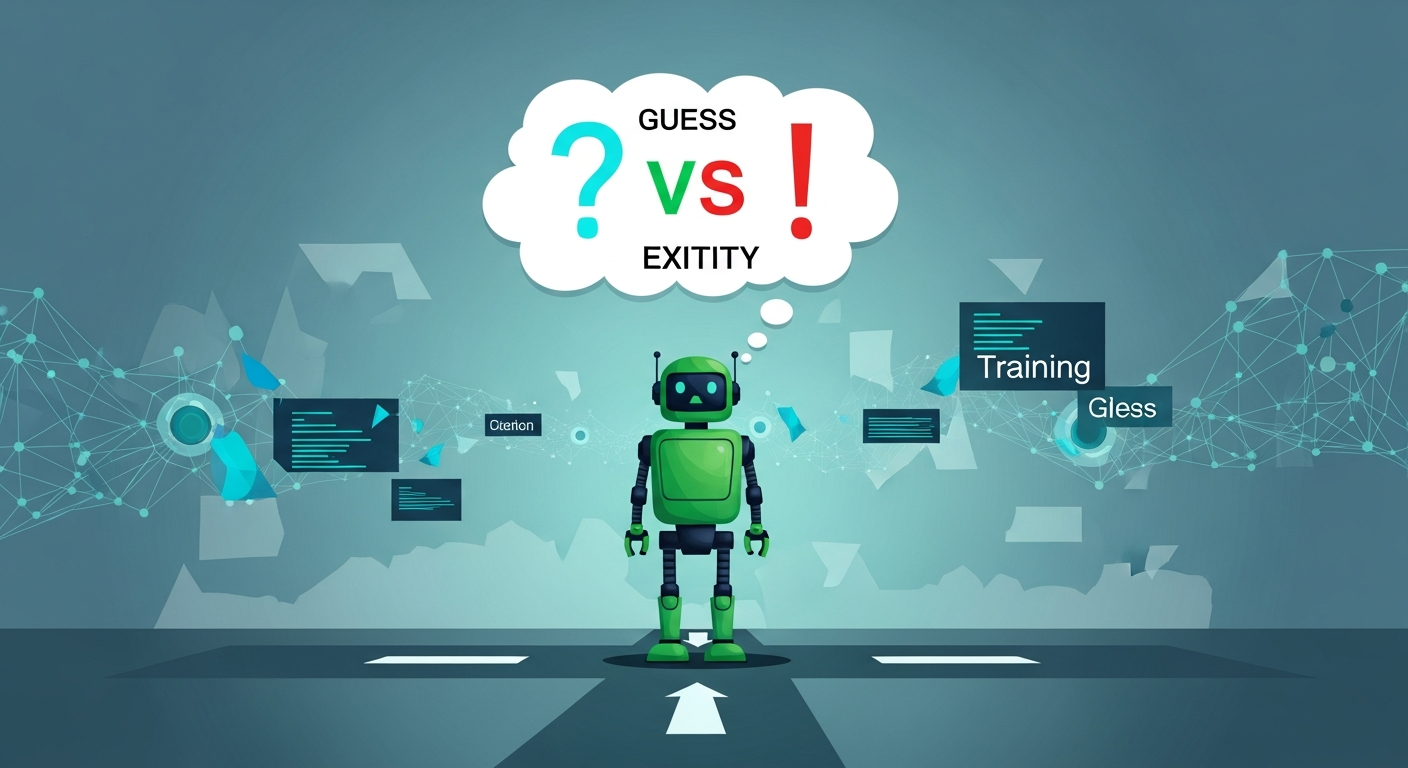
OpenAI just published groundbreaking research revealing why AI models hallucinate - turns out it's because current training methods reward confident guessing over admitting uncertainty, and they believe this can actually be fixed through better evaluation metrics.
Anthropic agreed to pay at least one-point-five billion dollars to settle a class-action lawsuit from authors who discovered the company downloaded over seven million pirated books from shadow libraries to train Claude - marking the first major copyright payout from an AI company.
Chinese AI labs are moving fast while US companies slow down - Alibaba just dropped Qwen3-Max-Preview with one trillion parameters, and Moonshot released their massive Kimi K2-Instruct model, both claiming major performance gains over existing models.
OpenAI is partnering with Broadcom to mass-produce custom AI chips starting next year in a ten billion dollar deal, joining Google, Amazon, and Meta in the race to reduce dependence on NVIDIA's expensive hardware.
Tesla's board is asking shareholders to approve an unprecedented compensation package that could deliver Elon Musk up to one trillion dollars in stock over the next decade - but only if Tesla's market value grows eight times its current size.
Google's search product lead just hinted that the classic google-dot-com blue links experience could soon be replaced by AI Mode as the default, potentially ending the web's twenty-seven-year-old front door as we know it.
DEEP DIVE ANALYSIS
Let's dive deep into what might be the most significant AI research breakthrough we've seen this year - OpenAI's revelation about why language models hallucinate and how to fix it.
Technical Deep Dive
The core discovery here is elegantly simple yet profound. OpenAI's researchers found that AI hallucinations aren't some mysterious emergent behavior - they're a direct result of how we've been training these models. Current evaluation methods give full points for lucky guesses but zero points for saying "I don't know.
" This creates what the researchers call a fundamental conflict in the training process. Think about it this way: if you're a student and you know that admitting ignorance gets you zero points while wild guessing might occasionally hit the jackpot, you'd guess every time too. The models learn to always provide an answer, even when they're completely uncertain, because uncertainty is systematically punalized in training.
The technical solution involves redesigning evaluation metrics to explicitly reward honesty and penalize confident errors more heavily than expressions of uncertainty. Instead of binary right-or-wrong scoring, they're proposing calibrated rewards based on the model's actual confidence levels. This is a fundamental shift from maximizing accuracy to optimizing for reliability and truthfulness.
Financial Analysis
This research could reshape billions in AI infrastructure spending. Right now, companies are burning enormous amounts on compute and training because they're essentially training models to be confidently wrong. OpenAI themselves just projected burning one-hundred-fifteen billion dollars through twenty-twenty-nine, eighty billion more than previous estimates.
If this calibrated training approach works at scale, it could dramatically improve model reliability while potentially reducing the compute needed for effective training. That's massive when you consider that model training costs are exponentially increasing - we're talking about potential savings in the hundreds of millions per major model training run. From a business model perspective, this could be the key to unlocking enterprise adoption at scale.
The biggest barrier to AI deployment in mission-critical business applications isn't capability - it's reliability. Companies can't afford AI systems that confidently provide wrong answers in financial analysis, medical diagnosis, or legal research. Solving hallucinations removes the primary adoption blocker for high-value enterprise use cases.
The competitive implications are huge too. Whichever labs successfully implement this approach first could capture disproportionate market share in enterprise AI, where reliability commands premium pricing.
Market Disruption
This research could trigger a complete reset of the AI competitive landscape. Right now, labs are primarily competing on capability benchmarks - who can score highest on coding tests, math problems, or reasoning challenges. But if hallucination-resistant training becomes standard, the competition shifts to reliability and trustworthiness.
This particularly threatens AI companies that have built their entire value proposition around raw performance metrics. Suddenly, a smaller model that admits uncertainty appropriately could be more valuable than a larger model that confidently fabricates answers. We're already seeing this play out in real-world deployments.
Klarna famously replaced seven hundred service representatives with chatbots in twenty-twenty-three, only to rehire humans when customer satisfaction tanked because the bots couldn't handle complex cases appropriately. The timing is critical too. As Chinese labs like Alibaba race ahead with trillion-parameter models, US companies focusing on reliability over raw scale could maintain competitive advantage through superior deployment success rates in enterprise markets.
Cultural and Social Impact
This research addresses what might be AI's biggest public trust problem. Every user has experienced AI's supremely confident wrong answers, and it's created a credibility gap that's slowing adoption across society. Teachers are hesitant to recommend AI tools because students might receive confidently incorrect information.
Doctors won't rely on AI diagnostic assistance that might confidently misdiagnose. The social implications of more reliable AI extend far beyond technology adoption. We're looking at potential transformation in education, where AI tutors could safely admit knowledge gaps rather than misleading students.
In healthcare, AI assistants could appropriately defer to human judgment in uncertain cases rather than confidently suggesting inappropriate treatments. This could also reshape how we think about human-AI collaboration. Instead of AI as an overconfident know-it-all, we're moving toward AI as a thoughtful collaborator that knows its limitations - fundamentally changing the dynamic from replacement anxiety to partnership opportunity.
Executive Action Plan
First, if you're deploying AI systems in your organization, immediately audit your current implementations for hallucination risks in mission-critical applications. Focus particularly on customer-facing systems, financial analysis tools, and any AI making recommendations that could have legal or safety implications. Consider implementing human oversight layers for high-stakes decisions until more reliable models become available.
Second, start evaluating your AI vendors not just on performance benchmarks, but on their reliability and uncertainty quantification capabilities. Ask potential AI partners specifically about their hallucination mitigation strategies and demand transparency about confidence levels in their outputs. This will become a key differentiator as the market matures.
Third, begin preparing your organization for the shift from capability-focused AI to reliability-focused AI. This means training your teams to value AI systems that appropriately express uncertainty over those that always provide confident answers. Update your AI procurement criteria to weight trustworthiness alongside performance, and consider piloting deployment strategies that reward AI systems for knowing their limits rather than penalizing them for admitting ignorance.
Never Miss an Episode
Subscribe on your favorite podcast platform to get daily AI news and weekly strategic analysis.