ZoomInfo Cuts Marketing Team 93 Percent Using AI Agents
Episode Summary
Your daily AI newsletter summary for August 26, 2025
Full Transcript
TOP NEWS HEADLINES
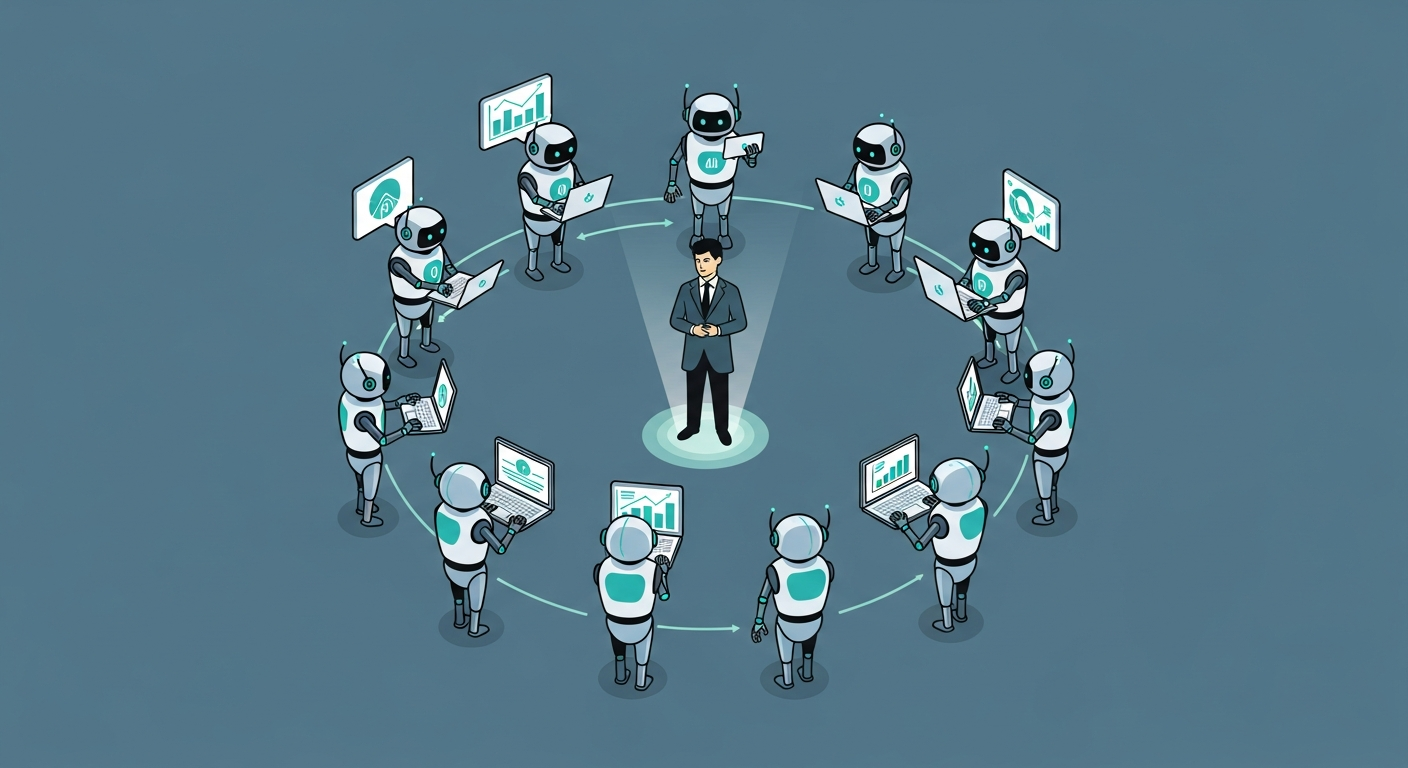
ZoomInfo's CEO just dropped a bombshell that should wake up every executive listening today - his company cut their product marketing team from 26 people down to just 2 by implementing AI agents, and now two-thirds of their 3,500 employees use AI tools daily.
Apple is reportedly in serious talks with Google about using Gemini to completely rebuild Siri, marking a dramatic departure from their traditionally secretive approach and signaling just how far behind they've fallen in the AI race.
Bloomberg reports Apple is weeks away from deciding between their internal models and external partnerships.
Meta just announced a major partnership with Midjourney to integrate their aesthetic AI technology across Meta's product lineup, showing that even the biggest tech companies are looking externally for specialized AI capabilities rather than building everything in-house. xAI has open-sourced Grok 2.5 on Hugging Face with commercial licensing restrictions, and Elon Musk says Grok 3 will follow in about six months - this is significant because it's a 314 billion parameter model that requires serious computational resources to run.
Here's something that should concern every business leader: Brave security researchers just exposed a critical vulnerability in Perplexity's AI browser where malicious websites can trick the AI into stealing user credentials and personal data through what they're calling the "Lethal Trifecta" - AI access to untrusted data, private data, and external communication capabilities.
Malaysia just launched the world's first fully AI-powered bank called Ryt Bank, running on their own large language model and offering 24/7 multilingual banking with no paperwork, no fees, and instant credit decisions - this is what banking disruption looks like in 2025.
DEEP DIVE ANALYSIS
Let's dive deep into that ZoomInfo story because it perfectly illustrates the seismic shift happening in corporate America right now. Henry Schuck didn't just implement some AI tools - he fundamentally restructured his entire 3,500-person company around an AI-first philosophy, and the results are staggering.
Technical Deep Dive
What ZoomInfo built goes far beyond simple chatbot implementation. They created over 1,000 internal AI agents that employees have developed themselves, with two-thirds of the workforce using these tools daily. The company implemented what they call an "agent-first" architecture where employees are trained to think: "I don't ever want to ask you this question again - put it in an agent.
" Their product marketing transformation is particularly fascinating. Instead of 26 humans translating product information into marketing content, they now have 2 people managing AI systems that can automatically generate personalized content at scale. They've essentially built a self-improving knowledge system where agents get better over time as they process more data and interactions.
The technical infrastructure required for this involves sophisticated prompt engineering, workflow automation, and integration with existing business systems.
Financial Analysis
The numbers tell a compelling story. ZoomInfo has maintained 20 percent year-over-year growth in their fastest-growing business unit while dramatically reducing headcount in specific functions. Think about the math here - if you're paying an average of dollar 100,000 per year for those 24 product marketing positions they eliminated, that's dollar 2.
4 million annually in direct cost savings, not including benefits, office space, and management overhead. But the real financial impact goes deeper. When 80 percent of your engineering teams pivot to AI-first product development, you're talking about a fundamental shift in how you allocate your most expensive resource - engineering talent.
Instead of building traditional features, they're building systems that scale exponentially. The productivity multiplier effect is enormous when you consider that these AI agents work 24/7 and can handle thousands of requests simultaneously. The cost structure transformation is what should really get executives' attention.
Traditional software companies scale linearly - more customers require more support staff, more content requires more marketers. ZoomInfo is building a model that scales logarithmically - their AI systems can handle exponentially more work with minimal additional human resources.
Market Disruption
ZoomInfo's approach represents a new category of competitive advantage that's going to be impossible to ignore. They're not just using AI as a tool - they're rebuilding their entire operational model around AI capabilities. This creates a competitive moat that traditional competitors can't easily replicate without completely restructuring their organizations.
The implications for the broader B2B software market are massive. Companies that don't make this transition will find themselves competing against businesses that operate at fundamentally different cost structures and speed of execution. When ZoomInfo can generate personalized marketing content automatically and make data-driven decisions in real-time, traditional competitors relying on human-powered processes will look like they're moving in slow motion.
What's particularly interesting is how this affects talent acquisition and retention. ZoomInfo isn't just hiring for AI skills - they're hiring for what Henry calls "systems thinking" - people who can trace problems through complex interconnected systems. This is becoming the new baseline skill requirement across the organization.
Cultural and Social Impact
This transformation reveals something profound about the future of work that most executives aren't talking about yet. ZoomInfo's CMO literally had nightmares about her kids not being AI algorithms - that level of cultural pressure to adapt represents a fundamental shift in corporate culture that goes way beyond traditional change management. The company is essentially creating two classes of employees: those who can effectively leverage AI to multiply their capabilities, and those who can't.
Henry Schuck's warning is stark - you have a "ticking time clock on your ability to be a valuable employee" if you don't embrace AI tools. This isn't about replacing humans with machines; it's about humans with AI replacing humans without AI. The psychological impact on workers is significant.
Employees are essentially required to continuously prove their value by finding new ways to incorporate AI into their workflows. This creates a culture of constant adaptation and learning that some people will thrive in while others will find overwhelming.
Executive Action Plan
First, audit your organization immediately for what I call "French fries jobs" - Henry's analogy for any repetitive task that could be automated. Don't just look at obvious candidates like data entry. Examine content creation, customer research, competitive analysis, and internal reporting.
Create a systematic inventory of every process that involves taking information from one format and putting it into another format. These are your immediate AI automation targets. Second, implement what ZoomInfo calls the "never ask twice" policy.
Any time someone asks a question that could be answered by accessing existing company data or following a documented process, that should trigger the creation of an AI agent. Start with your most frequently asked internal questions - HR policies, technical documentation, customer data queries. Build your internal agent ecosystem systematically rather than trying to solve everything at once.
Third, restructure your hiring and performance evaluation criteria around AI collaboration capabilities. Don't just hire AI specialists - hire people who demonstrate systems thinking and the ability to break down complex problems into AI-manageable components. Create career development tracks that assume AI integration rather than treating it as optional.
Your competitors are already doing this, and the talent gap is going to widen quickly between organizations that embrace this shift and those that don't.
Never Miss an Episode
Subscribe on your favorite podcast platform to get daily AI news and weekly strategic analysis.