Chinese AI Models Undercut Western Competitors by 90 Percent
Episode Summary
Your daily AI newsletter summary for August 23, 2025
Full Transcript
TOP NEWS HEADLINES
Meta just completed a massive AI restructure under Alexandr Wang, dissolving their AGI Foundations team and imposing a hiring freeze after their summer talent poaching spree.
The Chan Zuckerberg Initiative launched rBio, an AI model trained on virtual cell simulations that could compress pharma R&D timelines from decades to years.
Anthropic rolled out a nuclear threat classifier inside Claude that flags bomb-making queries with 94.8% accuracy, essentially turning AI models into policy enforcement tools.
Google published comprehensive data showing AI energy usage is far lower than estimated - a median Gemini prompt uses just 0.24 watt-hours, equivalent to watching TV for nine seconds.
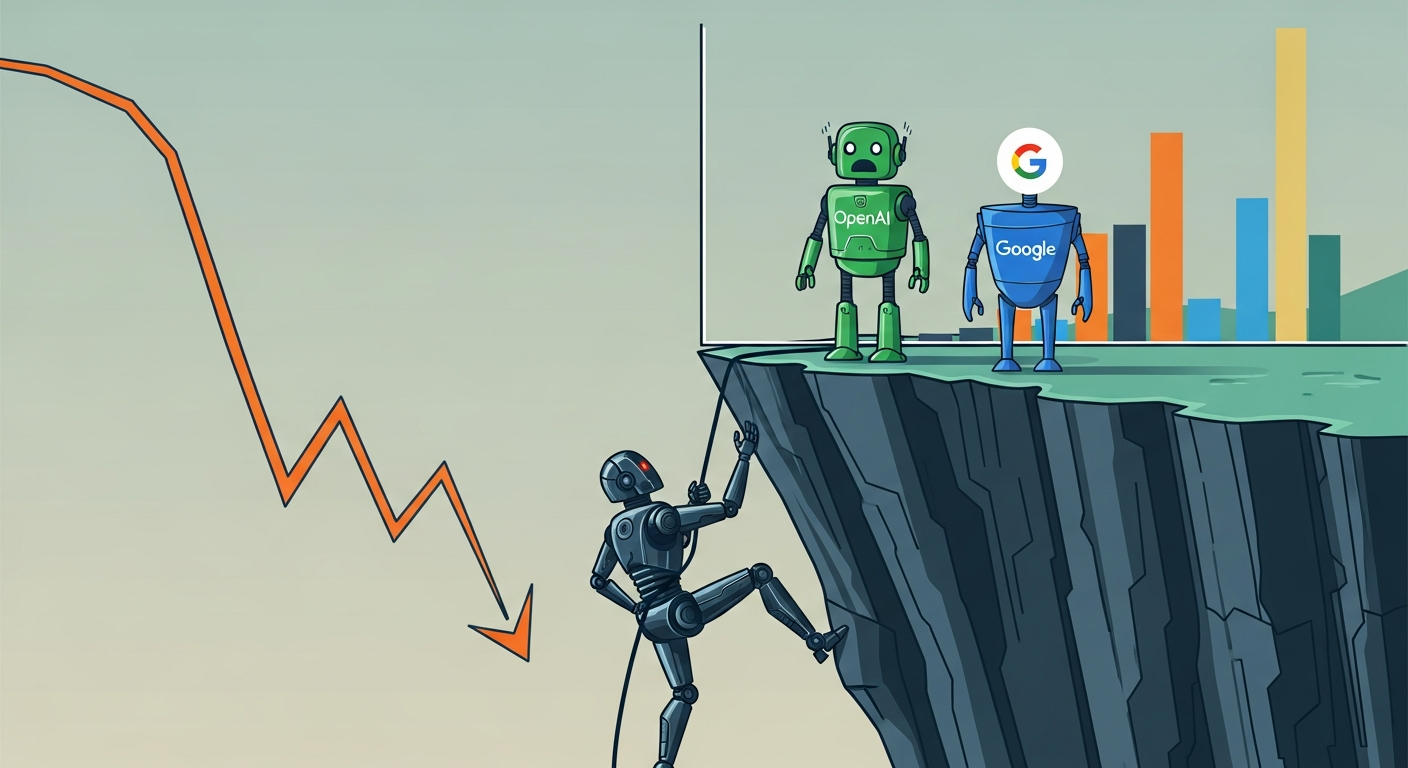
Chinese firms are releasing ultra-cheap AI models that outperform GPT-4 on coding while being 9 to 35 times cheaper than GPT-5, raising serious questions about security versus cost trade-offs.
A startup called Dynamics Lab just released Mirage 2, fully playable AI-generated video game worlds that run in real-time in your browser.
DEEP DIVE ANALYSIS
Let's dive deep into what might be the most significant development here - the emergence of ultra-cheap Chinese AI models that are fundamentally disrupting the economics of enterprise AI adoption.
Technical Deep Dive
We're looking at two game-changers: Z.ai's GLM 4.5 and DeepSeek V3.
1. GLM 4.5 beats GPT-4.
1 on coding benchmarks with a 64.2% success rate versus 48.6%, and it's designed to be "agent-native," meaning it can chain autonomous tasks together seamlessly.
DeepSeek V3.1 introduces what they call "hybrid thinking" - the model can switch between fast response mode and deep reasoning mode depending on the complexity of your request. Both models use mixture-of-experts architectures, but here's the kicker - they're achieving this performance at a fraction of the computational cost.
GLM 4.5 runs at just 11 cents per million input tokens and 28 cents per million output tokens. DeepSeek V3.
1 goes even lower at 7 cents input, $1.10 output. Compare that to GPT-5's pricing, and you're looking at cost reductions of 90% or more.
The technical achievement here isn't just about parameter efficiency - it's about inference optimization. These models are running on specialized hardware configurations that prioritize throughput over individual response latency, which works perfectly for enterprise batch processing scenarios.
Financial Analysis
The economics here are absolutely brutal for Western AI companies. If you're running a customer service operation processing thousands of queries daily, switching from GPT-5 to DeepSeek V3.1 could cut your AI costs by 90%.
For a company spending $100,000 monthly on AI inference, that's $90,000 in monthly savings, or over a million dollars annually. But here's where it gets interesting from a venture and valuation perspective. OpenAI's reported $4 billion annual revenue run rate is built on premium pricing.
If commodity-level AI performance becomes available at these price points, it forces a complete reevaluation of AI business models. We're potentially looking at a race to the bottom on inference pricing, which means the value has to move up the stack to applications, data, and integration layers. For enterprise procurement teams, this creates an immediate budget reallocation opportunity.
That AI line item could potentially fund entire digital transformation initiatives instead. But there's a hidden cost structure most CFOs aren't calculating - the total cost of ownership includes compliance, security auditing, and risk management for foreign models.
Market Disruption
This is reminiscent of the cloud infrastructure price wars of the 2010s, but accelerated. Chinese AI labs are essentially using a penetration pricing strategy to gain global market share, subsidized by massive domestic investment. The geopolitical implications are staggering - if global enterprises become dependent on Chinese AI infrastructure, it creates unprecedented leverage points.
For established players like OpenAI, Anthropic, and Google, this forces an uncomfortable choice: compete on price and destroy margins, or compete on security and compliance - essentially becoming the "premium" option. We're already seeing this play out with Anthropic's government contracts and OpenAI's enterprise security positioning. The middleware and integration layer becomes the new battleground.
Companies like Vellum, LangChain, and others building AI development platforms may see increased demand as enterprises need sophisticated management tools to safely deploy these cheaper models.
Cultural & Social Impact
We're witnessing the commoditization of artificial intelligence happening in real-time. When AI becomes as cheap as electricity, it fundamentally changes how businesses operate. Every process becomes a candidate for AI augmentation.
This democratizes AI access globally, but also creates massive security and privacy implications. The cultural shift is profound - we're moving from "can we afford to use AI" to "can we afford not to use AI." But there's a darker side.
As one security expert warned, agent-to-agent poisoning is now possible. Imagine your company's AI assistant getting compromised and subtly manipulating decisions across your entire organization. The trust infrastructure for AI hasn't caught up to the deployment speed.
Executive Action Plan
First, immediately audit your current AI spending and model performance baselines. You need hard data on what you're paying per token and what business outcomes you're achieving. This gives you negotiating leverage with existing providers and objective criteria for evaluating alternatives.
Second, establish a risk-based AI governance framework now, before you need it. Create security protocols for evaluating foreign AI models, including data residency requirements, audit trails, and kill-switch capabilities. The companies getting this right are working with specialized AI governance platforms that can monitor model behavior and detect anomalies in real-time.
Third, start planning your AI architecture for model diversity. The future isn't about finding the one perfect AI model - it's about orchestrating multiple models for different use cases. Build your systems to be model-agnostic from day one.
This positions you to take advantage of price competition while maintaining security and performance standards across your entire AI stack.
Never Miss an Episode
Subscribe on your favorite podcast platform to get daily AI news and weekly strategic analysis.