Alibaba's Open-Source Image Editor Disrupts Creative Software Market
Episode Summary
Your daily AI newsletter summary for August 20, 2025
Full Transcript
TOP NEWS HEADLINES
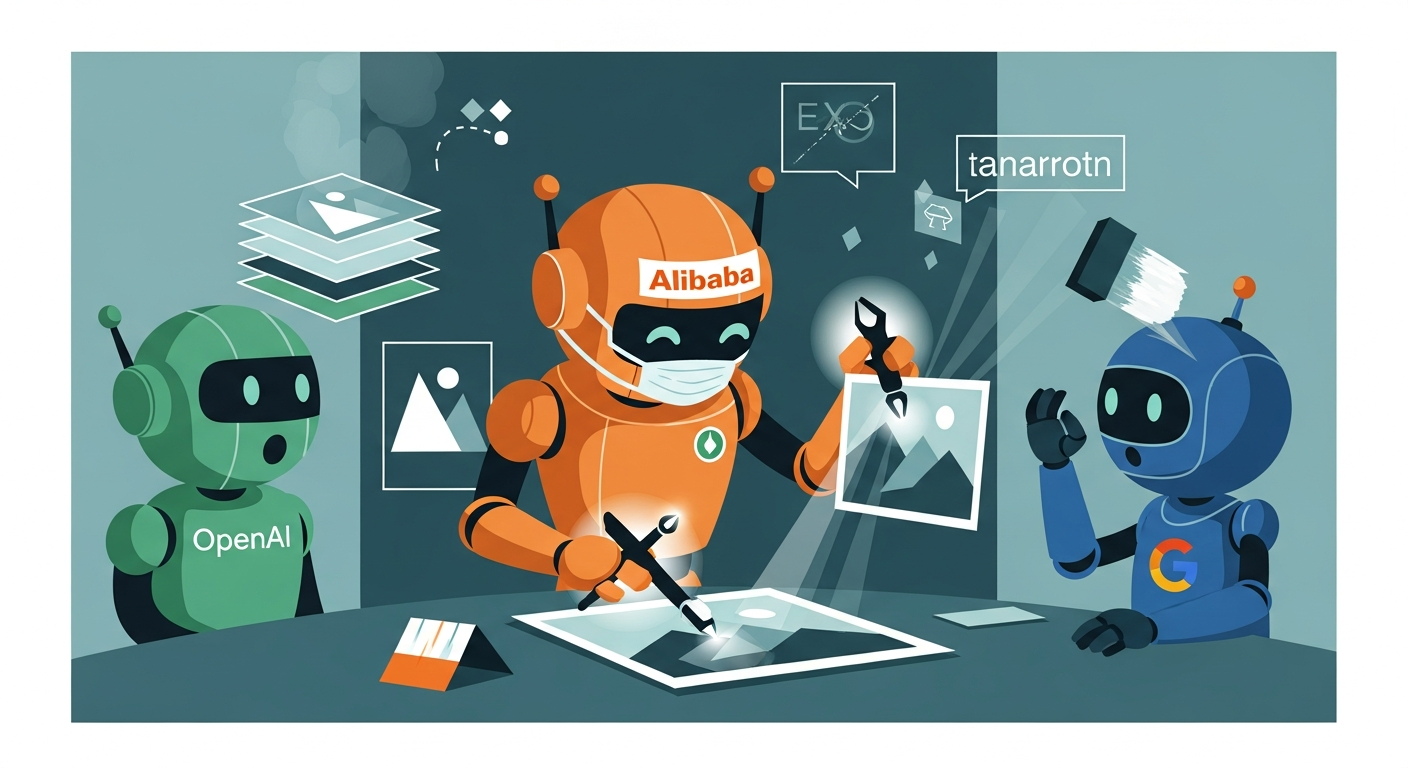
Alibaba just dropped Qwen-Image-Edit, a 20-billion parameter open-source image editing model that's crushing benchmarks and beating out commercial rivals like FLUX and GPT Image.
What makes this particularly interesting is that it can handle precise edits while keeping original characters intact, plus it supports bilingual text editing directly within images.
Claude Opus 4.1 Thinking has launched straight to the top of AI benchmarks, tying with GPT-5 for first place across coding, math, creative writing, and web development tasks.
This is Anthropic's most capable model yet and it's showing some serious competitive muscle against OpenAI's latest offerings.
OpenAI rolled out ChatGPT Go in India for just $4.60 a month, offering 10x higher message limits and better memory retention than the free tier.
While it's geo-restricted to India for now, this could signal a major shift toward more affordable AI pricing globally as competition heats up.
A fascinating field experiment with 70,000 job applicants in the Philippines found that AI voice agents actually outperformed human recruiters across every metric - delivering 12% more job offers, 18% more successful job starts, and 17% higher retention rates while reducing gender discrimination.
Grammarly launched eight new AI agents including one that can predict your paper's grade before you submit it, using course details and publicly available instructor information.
It's part of a broader push into AI-powered education tools that could reshape how students approach academic work.
Google Cloud research revealed that over 90% of game developers are already integrating AI into their workflows, with teams using it for everything from playtesting to procedural world generation.
The gaming industry appears to be one of the fastest adopters of AI technology we're seeing across any sector.
DEEP DIVE ANALYSIS
Let's dig deep into Alibaba's Qwen-Image-Edit release, because this represents a significant shift in the AI image editing landscape that could reshape multiple industries.
Technical Deep Dive
Qwen-Image-Edit is built on a 20-billion parameter architecture that tackles what's been one of AI's trickiest challenges - making precise image edits without destroying the original context. The model uses a dual-track approach, splitting editing tasks into two categories: style transformations like rotating objects or changing artistic styles, and localized edits that modify specific areas while preserving everything else intact. The really clever part is how they've solved the text-in-images problem.
Traditional image generators struggle with editing text that's already embedded in photos - think changing words on signs or documents. Qwen-Image-Edit can modify Chinese and English text directly within images while maintaining the original fonts, sizes, and formatting. From a technical standpoint, this requires the model to understand not just visual context but also typography and design principles.
The model also supports what they call "stacked edits" - you can make multiple modifications to the same image sequentially rather than starting over each time. This is huge for professional workflows where iterative refinement is standard practice.
Financial Analysis
The open-source nature of this release is the real financial story here. Alibaba is essentially giving away technology that competing companies like Adobe, Canva, and OpenAI charge premium prices for. This puts massive pressure on subscription-based image editing services that rely on proprietary AI models for their competitive moat.
For enterprises, this could dramatically reduce software licensing costs. Instead of paying per-user monthly fees for advanced editing capabilities, companies could potentially integrate Qwen-Image-Edit into their own workflows for the cost of compute infrastructure. We're looking at potential savings in the thousands per month for medium-sized creative teams.
The compute requirements are substantial though - 20 billion parameters means you need serious hardware to run this effectively. Cloud inference costs could range from 10 to 50 cents per edit depending on complexity, which still undercuts most commercial alternatives but isn't free. For Alibaba, this is likely a strategic loss-leader play.
They're using their cloud infrastructure advantage to commoditize AI editing capabilities, potentially driving more businesses to their cloud services where the real revenue sits.
Market Disruption
This release directly threatens Adobe's Creative Cloud empire, particularly Photoshop's AI features. When a free, open-source model can match or exceed the capabilities of expensive proprietary tools, it fundamentally shifts competitive dynamics. Adobe's stock has already shown volatility around AI announcements, and this kind of capability becoming freely available should concern their shareholders.
The broader creative software market is looking at potential disruption across multiple segments. Canva, Figma, and other design-focused platforms built their moats on ease-of-use, but when AI can handle complex editing tasks through natural language commands, the user experience advantage becomes less relevant. We're also seeing implications for stock photo and creative asset companies.
When AI can seamlessly edit and customize existing images, the demand for purchasing multiple variations of similar content could decrease significantly.
Cultural & Social Impact
The democratization of advanced image editing capabilities has profound implications for content creation and media literacy. When powerful editing tools become freely accessible, we'll likely see an explosion in AI-modified content across social media, marketing, and journalism. This raises serious questions about authenticity and trust in visual media.
As editing capabilities become more sophisticated and accessible, distinguishing between original and AI-modified content becomes increasingly difficult. We're already seeing this challenge with deepfakes, but sophisticated image editing could make the problem more pervasive. For creative professionals, this represents both opportunity and threat.
While powerful tools become more accessible, the skill premium for technical image editing expertise may diminish. The focus shifts toward creative vision and strategic thinking rather than technical execution. The bilingual text editing capability is particularly significant for global brands and international marketing teams.
The ability to quickly localize visual content for different markets without starting from scratch could accelerate global marketing campaigns and reduce costs.
Executive Action Plan
First, technology executives should immediately assess their current image editing software spend and ROI. If your organization is paying significant subscription fees for Adobe Creative Cloud or similar tools primarily for AI-powered editing features, you need to evaluate whether open-source alternatives like Qwen-Image-Edit could meet your needs at lower cost. Run pilot programs with your creative teams to test capabilities against current workflows.
Second, consider the strategic implications for your product development roadmap. If your company offers any visual content creation, marketing automation, or creative tools, this level of capability becoming freely available changes your competitive landscape overnight. You need to identify what unique value your platform provides beyond basic image editing and double down on those differentiators.
Third, start building AI content policies and detection capabilities now. Whether you're in media, e-commerce, social platforms, or any business that relies on visual content, the proliferation of sophisticated editing tools requires proactive approaches to content authenticity. Invest in AI detection systems and establish clear guidelines for AI-modified content in your organization and customer-facing materials.
Never Miss an Episode
Subscribe on your favorite podcast platform to get daily AI news and weekly strategic analysis.