Microsoft Deploys GPT-5 Across Entire Copilot Ecosystem
Episode Summary
Your daily AI newsletter summary for August 18, 2025
Full Transcript
TOP NEWS HEADLINES
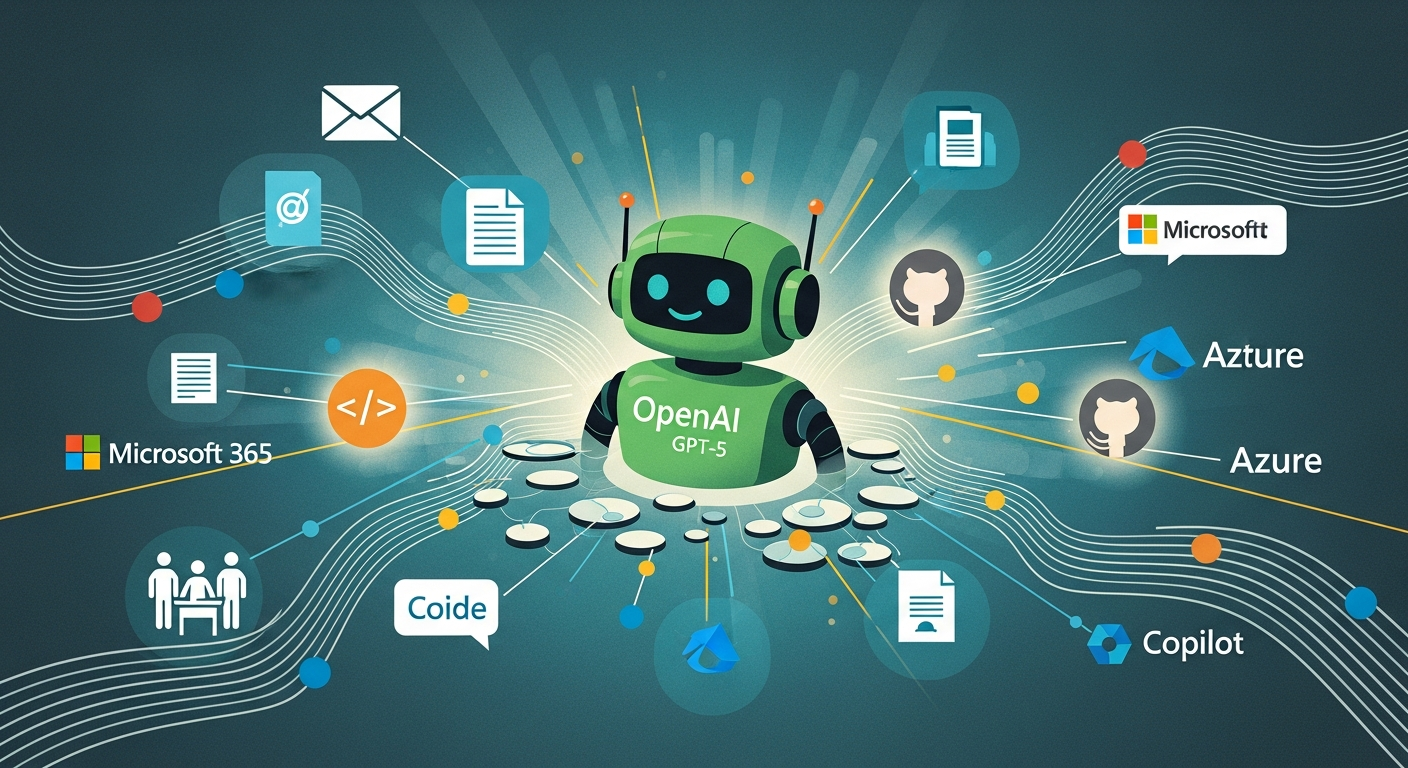
Microsoft has just made the biggest AI integration move of the year, rolling out GPT-5 across their entire Copilot ecosystem - that's Microsoft 365, GitHub, Azure, and the standalone Copilot app, giving millions of users access to OpenAI's most advanced model.
The new "Smart mode" in Copilot automatically switches between quick responses and deep analysis without users having to toggle anything, while GPT-5's expanded context window can now understand entire workflows including email history and document patterns.
For developers, GitHub Copilot with GPT-5 is introducing what they're calling "chat checkpoints" - letting you rewind your coding session and Copilot's memory to any previous state, which could be a game-changer for complex debugging.
Microsoft 365 Copilot is now reasoning across your entire Microsoft Graph - that means it can simultaneously analyze your emails, SharePoint docs, Teams meetings, and OneDrive files for context-aware insights that standalone ChatGPT simply can't access.
Azure AI Foundry is giving developers instant access to four distinct GPT-5 models through their platform, with Microsoft's automatic model router picking the optimal model for each specific prompt to balance performance and costs.
Perhaps most surprisingly, Microsoft is making GPT-5 available to all Copilot users - including free tier users - giving them five times more advanced reasoning queries daily than ChatGPT's free tier offers.
DEEP DIVE ANALYSIS
This Microsoft-GPT-5 integration represents the most significant enterprise AI deployment we've seen to date, and frankly, it's a masterclass in strategic AI implementation that every tech executive should be studying closely. Let's start with the technical architecture here, because Microsoft isn't just slapping GPT-5 onto their existing tools. They've built what they call an automatic model router that intelligently selects between four different GPT-5 variants - standard, mini, nano, and chat - based on the complexity and context of each request.
This isn't just about having the best AI model; it's about having the right AI model for each specific task. The expanded context window of up to 272,000 tokens means the system can maintain awareness of your entire work session, not just individual prompts. But here's what's really technically impressive - the Microsoft Graph integration.
While ChatGPT operates in isolation, Microsoft 365 Copilot can reason across your organization's entire knowledge base simultaneously. It's accessing emails, SharePoint documents, Teams transcripts, and OneDrive files in real-time to provide responses that are grounded in your actual work context. This isn't just a feature upgrade; it's a fundamental shift in how enterprise AI operates.
From a financial perspective, Microsoft is making a massive bet here, and the economics are fascinating. They're essentially subsidizing GPT-5 access across their entire user base - we're talking about hundreds of millions of users getting access to what is likely OpenAI's most expensive model to run. Microsoft's willingness to absorb these costs suggests they see this as a critical moat-building exercise.
They're not just competing on features; they're competing on access to advanced AI capabilities. The revenue implications are substantial. By embedding GPT-5 directly into workflow tools rather than forcing users to switch between applications, Microsoft is dramatically increasing the stickiness of their ecosystem.
Every query processed within their environment is a query not going to ChatGPT or Google's offerings. They're essentially making switching costs prohibitively high for enterprise customers who become dependent on these integrated AI capabilities. Looking at market disruption, this move puts enormous pressure on every other productivity software company.
Notion, Slack, Asana, Atlassian - they're all now competing against Microsoft's integrated AI experience. The bar for standalone productivity tools has just been raised significantly. If you're a SaaS company in the productivity space, you need to be asking yourself how you're going to match this level of AI integration without Microsoft's resources and OpenAI partnership.
Google is in a particularly interesting position here. They have the AI capabilities through Gemini, but they lack the comprehensive productivity ecosystem that Microsoft has built over decades. This could accelerate Google's push into enterprise productivity tools, but they're starting from a significant disadvantage in terms of enterprise adoption and integration depth.
The cultural and social impact here is profound. Microsoft is fundamentally changing how knowledge work gets done. When your AI assistant can analyze last week's emails, summarize missed meetings, and prep you for upcoming presentations by cross-referencing multiple data sources, we're looking at a significant productivity multiplier.
But we're also looking at increased dependency on AI for basic cognitive tasks. The democratization aspect is equally important - by making GPT-5 available to free users, Microsoft is accelerating AI adoption across economic segments. This could create a generation of workers who expect AI assistance as a baseline capability, not a premium feature.
For executives, here's your action plan. First, if you haven't already, you need to audit your organization's productivity stack and understand how Microsoft's integrated AI capabilities compare to your current solutions. The total cost of ownership calculation has fundamentally changed when AI capabilities are bundled rather than purchased separately.
Second, consider your competitive positioning if your organization relies on productivity tools. If you're building or managing products that compete with Microsoft's ecosystem, you need an AI strategy that's more than just "we'll add ChatGPT integration." The bar is now intelligent, context-aware AI that understands entire workflows, not just individual tasks.
Third, start preparing your workforce for this level of AI integration. The organizations that will benefit most from these capabilities are those that actively train their teams to leverage AI for strategic tasks rather than just automating routine work. This means rethinking job descriptions, performance metrics, and productivity measurements around human-AI collaboration rather than pure human output.
Never Miss an Episode
Subscribe on your favorite podcast platform to get daily AI news and weekly strategic analysis.