MIT AI Designs New Antibiotics That Kill Drug-Resistant Superbugs
Episode Summary
Your daily AI newsletter summary for August 16, 2025
Full Transcript
TOP NEWS HEADLINES
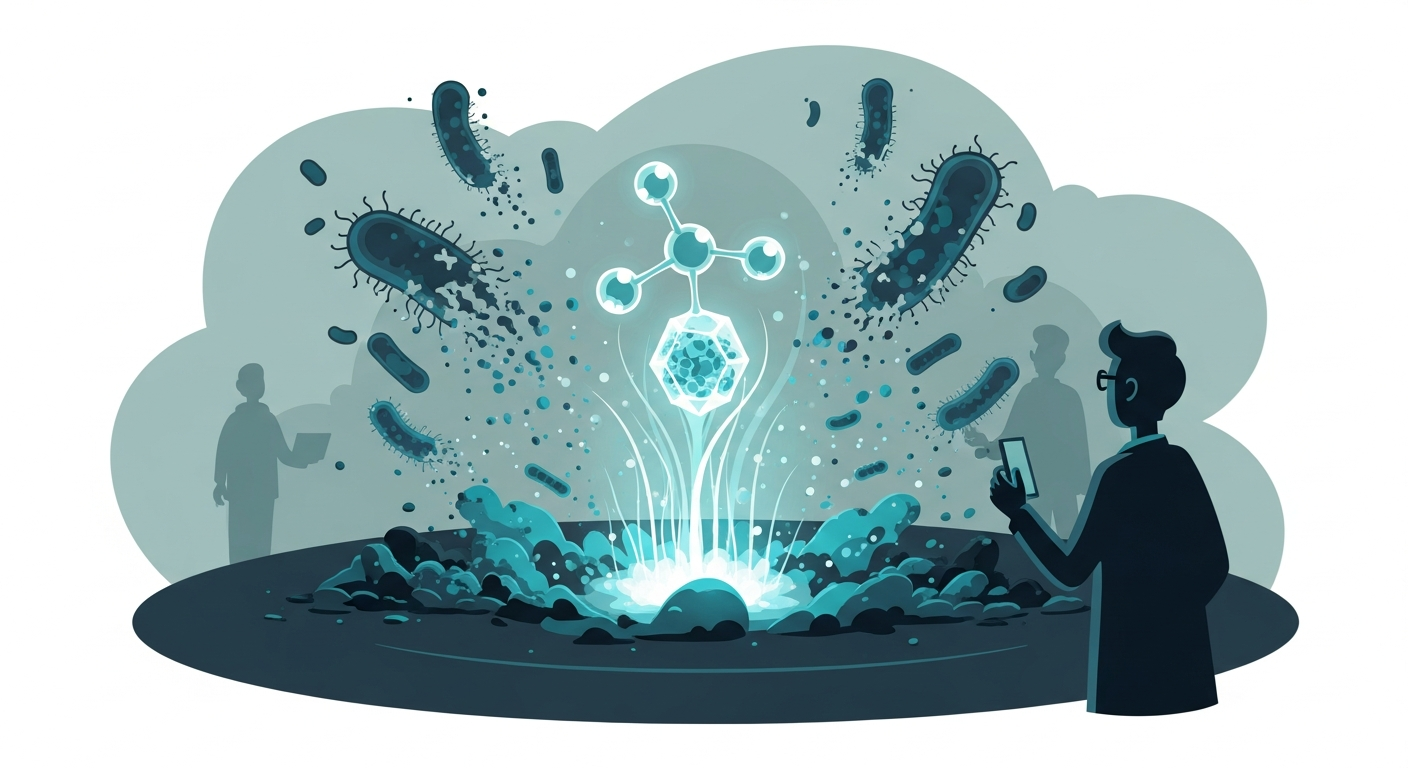
MIT researchers just used AI to design two completely new antibiotics from scratch that can kill drug-resistant superbugs like MRSA and gonorrhea - we're talking about AI creating molecular compounds that have never existed before and actually work in live testing.
Google dropped Gemma 3 270M, their smallest AI model yet at just 270 million parameters, but here's the kicker - it can run 25 conversations on a smartphone while using less than one percent of your battery.
HTC is making a serious play against Meta's Ray-Ban smart glasses with their new Vive Eagle lineup, priced at $520 and featuring the ability to switch between different AI assistants from OpenAI and Google.
Cohere just raised another $500 million at a $6.8 billion valuation, with backing from AMD, NVIDIA, and Salesforce, while simultaneously poaching Meta's VP of AI Research as their new Chief AI Officer.
GPT-5 might have gotten mixed reviews from consumers, but enterprise adoption is exploding - platforms like Cursor and Vercel have already made it their default model, and OpenAI's 500-person enterprise sales team is seeing demand jump eightfold for reasoning workloads.
Perplexity launched Comet, their AI-powered browser that doesn't just show you web pages but actually operates them for you - clicking buttons, filling forms, and completing tasks while you watch.
DEEP DIVE ANALYSIS
Let's dive deep into this MIT antibiotic breakthrough because this represents a fundamental shift in how we approach one of humanity's most pressing health crises. From a technical standpoint, what MIT accomplished here is genuinely revolutionary. They trained generative AI models to create 36 million theoretical chemical compounds from scratch - not just screening existing drug libraries, but actually inventing new molecular structures.
The AI then evaluated each compound for both bacteria-killing potential and human safety simultaneously. The two lead compounds, designated NG1 and DN1, attack bacterial cells through completely novel mechanisms that existing antibiotics don't use. When tested in mice, DN1 cleared MRSA skin infections while NG1 successfully fought drug-resistant gonorrhea.
This isn't just pattern matching - this is AI as a molecular architect. The financial implications are staggering. The global antibiotics market is worth about $45 billion annually, but it's been stagnant because traditional drug discovery takes 10-15 years and costs upward of $2.
6 billion per successful drug. MIT's approach could compress that timeline dramatically. We're looking at potential AI-driven drug discovery cycles measured in months, not decades.
For pharmaceutical companies, this could mean hundreds of new antibiotic candidates per year instead of the current trickle of maybe one or two. The cost savings alone could make previously uneconomical research viable again. But here's where it gets really interesting from a market disruption perspective.
This technology essentially democratizes drug discovery. Smaller biotech firms with AI expertise could suddenly compete with Big Pharma's massive R&D departments. We're already seeing AI-first drug companies like Recursion Pharmaceuticals and Atomwise gaining traction, but this MIT breakthrough shows the technology is mature enough for practical application.
Traditional pharmaceutical giants are going to have to completely rethink their R&D strategies or risk being outmaneuvered by nimble AI-native competitors. The cultural and social impact cannot be overstated. We're facing a crisis where antibiotic resistance kills over 700,000 people annually worldwide, with projections of 10 million deaths per year by 2050 if we don't solve this.
This AI breakthrough offers the first real hope of staying ahead of bacterial evolution instead of constantly playing catch-up. It's also changing how we think about human-AI collaboration in science - AI isn't just analyzing data anymore, it's actively creating new molecular solutions to problems humans couldn't solve alone. For technology executives, this creates three immediate action items.
First, if you're in healthcare technology, life sciences, or have any connection to pharmaceutical research, you need to start building relationships with AI-first drug discovery platforms now. The companies that get early access to these tools will have massive competitive advantages. Second, this represents a perfect case study for how AI can move beyond automation into true innovation - use this example when discussing AI strategy with your board to demonstrate AI's potential for creating entirely new revenue streams, not just optimizing existing ones.
Third, consider how this model of AI-driven molecular design might apply to your own industry - whether that's materials science, chemical manufacturing, or any field where you're designing complex systems with multiple constraints. The underlying approach of using AI to generate novel solutions and simultaneously optimize for multiple criteria is broadly applicable across industries.
Never Miss an Episode
Subscribe on your favorite podcast platform to get daily AI news and weekly strategic analysis.