Claude Sonnet 4 Expands Context Window to 1 Million Tokens
Episode Summary
Your daily AI newsletter summary for August 15, 2025
Full Transcript
TOP NEWS HEADLINES
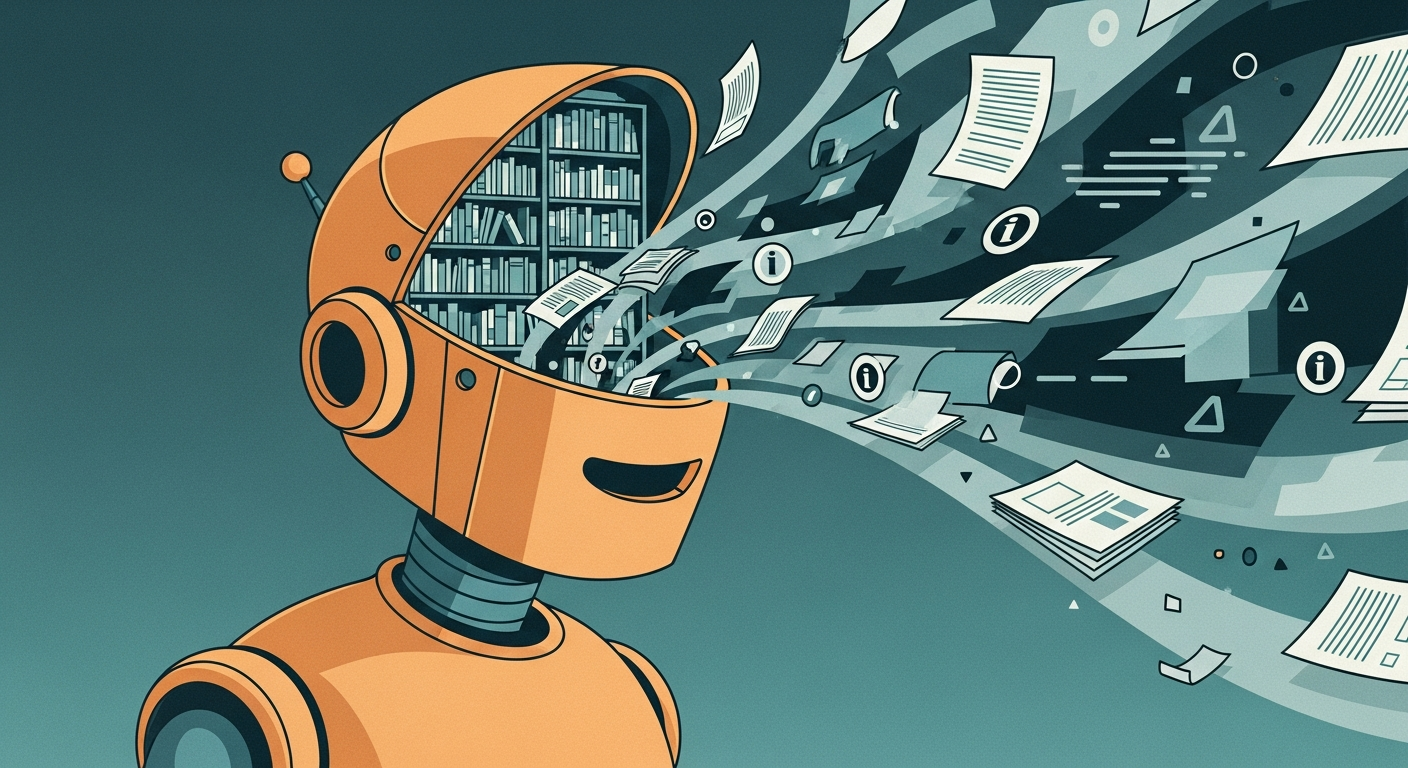
Claude Sonnet 4 just massively expanded its context window to 1 million tokens - that's a 5x jump from 200k, letting developers feed entire codebases or dozens of research papers into a single query.
This puts Anthropic squarely in competition with Google's Gemini and OpenAI's GPT-4 in the long context race.
Apple is doubling down on AI hardware with an ambitious product roadmap including tabletop robots, AI-powered security cameras, and a completely rebuilt Siri with personality features they're calling "Bubbles." The centerpiece is a desktop robot launching in 2027 that tracks users and serves as a virtual companion.
Half of office workers now trust AI tools like ChatGPT more than their human colleagues, according to a new CalypsoAI survey.
Even more striking - two-thirds of executives would use AI against company policy, and one-third of workers say they'd quit if AI were banned entirely.
OpenAI is backing brain-computer interface startup Merge Labs with most of the $250M funding coming from OpenAI's ventures arm, not Sam Altman personally.
The company is valued at $850M and aims to directly connect AI with human neurons.
DeepSeek R2 is rumored to launch by month's end, powered by Huawei's Ascend chips and potentially offering double the parameters of its predecessor at a fraction of OpenAI's GPT-5 pricing.
This could significantly disrupt the current AI pricing model. xAI co-founder Igor Babuschkin has left Elon Musk's company to start Babuschkin Ventures, focusing on AI safety research and investing in agentic systems.
DEEP DIVE ANALYSIS
Let's dive deep into Claude Sonnet 4's million-token context window expansion, because this represents a fundamental shift in how we think about AI deployment in enterprise environments.
Technical Deep Dive
The jump from 200,000 to 1 million tokens is more than just a numbers game - it's a qualitative change in AI capabilities. To put this in perspective, a million tokens can handle roughly 750,000 words, which means you can now feed Claude an entire novel, a complete software repository with documentation, or dozens of research papers in a single conversation. The technical challenge here isn't just memory - it's maintaining coherence and accuracy across that massive context.
Anthropic has had to solve complex attention mechanism problems and optimize their transformer architecture to prevent the model from losing track of earlier information as the conversation grows. The pricing structure reveals the computational reality: inputs over 200k tokens cost double at $6 per million tokens versus $3 for smaller inputs. This tiered pricing reflects the exponential computational cost of processing longer contexts, but it's still competitive enough to make large-scale document analysis economically viable for enterprises.
Financial Analysis
This move positions Anthropic to capture enterprise customers who've been waiting for AI that can handle real-world document workflows. Companies currently spending thousands on document processing, legal review, and code analysis services now have a cost-effective alternative. At $6 per million tokens for large contexts, analyzing a complete legal contract set that might cost $50,000 in attorney time could run under $100 in API calls.
The revenue implications are significant. Enterprise customers typically have much higher lifetime values than consumer users, and long-context capabilities create natural moats - once a company builds workflows around million-token analysis, switching costs become enormous. This could accelerate Anthropic's path to their rumored $40 billion valuation by making them indispensable for document-heavy industries like legal, finance, and healthcare.
Market Disruption
Claude's expansion directly challenges Google's Gemini, which has been the leader in long-context AI, and puts pressure on OpenAI to respond with similar capabilities. But the real disruption is in traditional professional services. Legal document review, financial due diligence, academic research assistance, and software code auditing are all ripe for automation at this scale.
Companies like Thomson Reuters, LexisNexis, and Bloomberg Terminal face potential disruption if AI can provide similar insights at a fraction of the cost. The consulting industry, particularly in areas requiring document analysis, needs to rethink their value propositions when AI can process in minutes what takes human analysts days.
Cultural & Social Impact
We're witnessing the emergence of AI as a true research partner rather than just a writing assistant. Knowledge workers will increasingly rely on AI for comprehensive analysis of large document sets, potentially changing how decisions are made in boardrooms and courtrooms. This could democratize access to sophisticated analysis previously available only to well-funded organizations.
However, there's a concerning dependency risk. As the survey data shows, workers are already trusting AI more than human colleagues. With million-token capabilities, this trust could extend to complex strategic decisions based on AI analysis of extensive data sets, potentially creating blind spots in human judgment.
Executive Action Plan
Technology executives should immediately audit their document-intensive workflows to identify quick wins for long-context AI implementation. Legal contract analysis, technical documentation processing, and competitive intelligence gathering are obvious starting points that could show ROI within quarters, not years. Second, start building institutional knowledge about prompt engineering for long-context scenarios.
Your teams need to develop expertise in structuring complex queries and validating AI analysis of large document sets. This isn't just about using the technology - it's about using it correctly and safely in high-stakes business contexts. Finally, begin preparing for the competitive landscape shift.
If your business model relies on human analysis of large document sets, you need a strategy for how AI capabilities will either enhance your offering or require you to move up the value chain to higher-level strategic work that AI cannot yet replicate.
Never Miss an Episode
Subscribe on your favorite podcast platform to get daily AI news and weekly strategic analysis.