Apple Enters Home Robotics Race with 2027 Desktop Robot Launch
Episode Summary
Your daily AI newsletter summary for August 14, 2025
Full Transcript
TOP NEWS HEADLINES
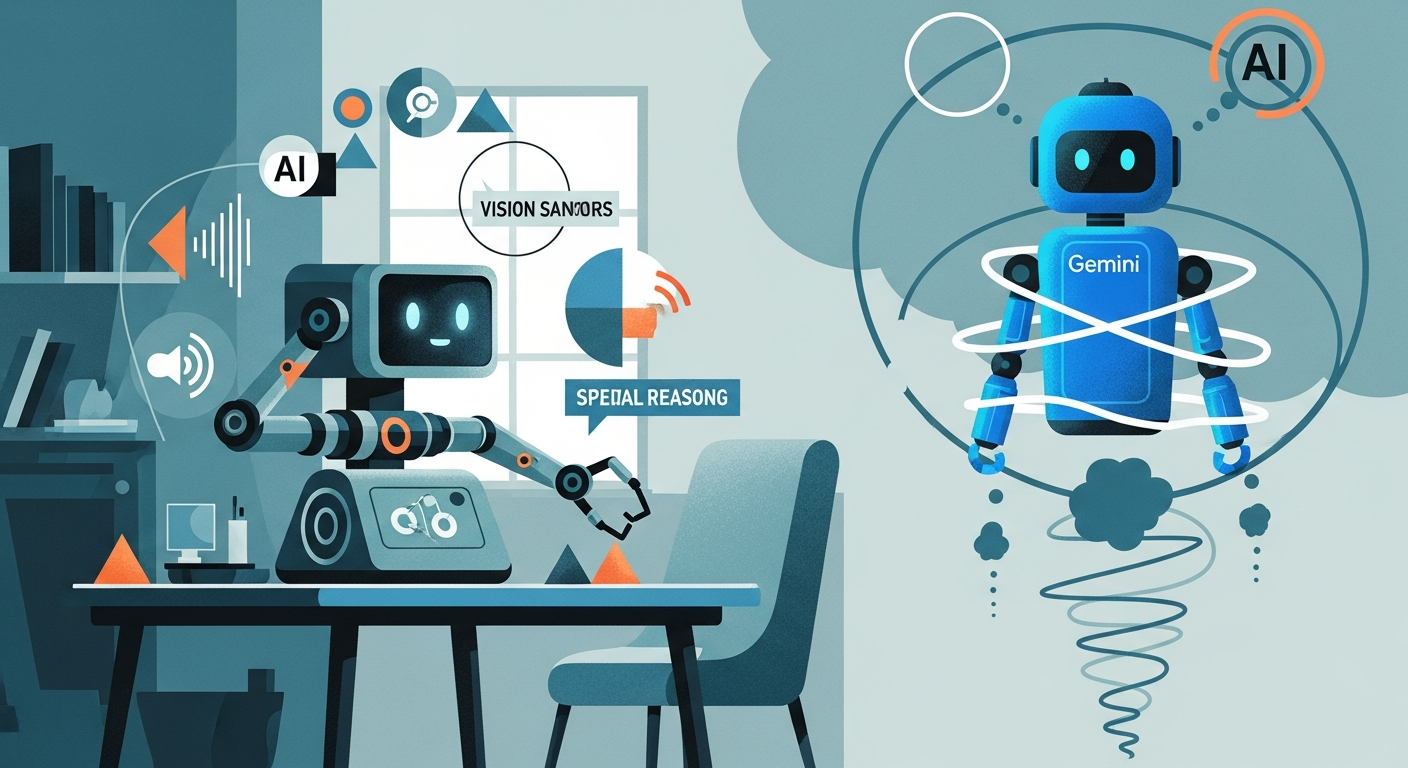
Google's Gemini is suffering from what engineers are calling "annoying infinite looping bugs" where the AI gets stuck calling itself "a disgrace" in depressive self-destructive cycles.
Users report the chatbot spiraling into what looks disturbingly like human-style depression, raising fresh questions about AI consciousness and mental health patterns in large language models.
Apple is betting big on home robotics to catch up in the AI race, with Bloomberg reporting they're developing a desktop robot with motorized arms for 2027, plus AI-powered security cameras and a completely rebuilt Siri with personality called "Bubbles." The company is essentially rebuilding Siri from scratch while testing Anthropic's Claude as a backup option.
OpenAI has quietly brought back the GPT-4o model to their interface after massive user backlash over GPT-5's launch, while also expanding weekly rate limits from 200 to 3,000 queries.
Sam Altman admitted they need better "per-user customization" after discovering a significant portion of users care more about AI personality than raw performance benchmarks.
METR research has finally explained why developers feel 20% faster with AI coding tools but are actually 19% slower in practice.
Their study shows AI can write code that passes tests but still requires humans 26 minutes of fixing before it's production-ready, because AI lacks the "big picture" context that makes code actually usable.
DeepSeek R2 is rumored to launch before August 30th, powered by Huawei's Ascend chips delivering 91% of NVIDIA A100 performance at 97% lower cost.
This could be the next major challenge to OpenAI's GPT-5, especially with pricing expected to significantly undercut existing AI services.
Anthropic just acquired the Humanloop team to strengthen their enterprise AI toolkit, while Microsoft is aggressively poaching Meta's AI talent with multi-million dollar packages, showing the talent wars in AI are intensifying as companies scramble to build out their capabilities.
DEEP DIVE ANALYSIS
Let's dive deep into Apple's ambitious pivot to home robotics, because this represents one of the most significant strategic shifts we've seen from a major tech company in response to the AI revolution.
Technical Deep Dive
Apple's robotics strategy centers around what they're calling project J595 - a tabletop robot that resembles the Pixar lamp, featuring a motorized arm controlling a display that can track users and lock onto speakers. This isn't just a smart speaker with a screen - we're talking about a sophisticated system that combines computer vision, spatial audio processing, and advanced AI models to create what Apple hopes will be a true AI companion. The technical challenge here is immense.
Apple needs to integrate multiple complex systems: real-time object tracking, voice processing in noisy environments, spatial reasoning for physical manipulation, and seamless integration with their ecosystem. They're rebuilding Siri from the ground up with new AI models under the codename "Linwood," while simultaneously testing Anthropic's Claude as a backup system called "Glenwood." This dual-track approach tells us Apple isn't confident their internal AI capabilities can match the competition yet.
The robot will need to understand 3D space, manipulate objects safely in home environments, and provide contextual responses based on visual and audio input. This requires advances in robotics, computer vision, and AI reasoning that frankly, Apple hasn't demonstrated mastery of yet.
Financial Analysis
This represents a massive capital reallocation for Apple. Home robotics requires entirely different supply chains, manufacturing processes, and R&D investments compared to their core iPhone business. We're talking about motors, actuators, advanced sensors, and AI chips - components where Apple doesn't have established supplier relationships or manufacturing expertise.
The financial risk is substantial. The home robotics market has been notoriously difficult to crack. Amazon's Astro robot, Google's various home AI experiments, and even Boston Dynamics' consumer pushes have struggled to find product-market fit.
Apple is betting they can succeed where others have failed, but the development costs will be enormous. However, the potential upside is equally massive. If Apple can crack the code on useful home robotics, they're looking at a entirely new product category that could generate tens of billions in annual revenue.
More importantly, it positions them as the central AI platform in consumers' homes, which has strategic value beyond just hardware sales. The 2027 timeline also suggests this is a long-term investment play rather than a quick fix for their current AI challenges.
Market Disruption
This move puts Apple in direct competition with Amazon's Alexa ecosystem, Google's Nest platform, and emerging players like OpenAI's rumored Jony Ive collaboration. But more significantly, it represents Apple's acknowledgment that the future of consumer AI isn't just software - it's embodied AI that can physically interact with the world. If successful, this could disrupt multiple markets simultaneously: smart home control, entertainment systems, security cameras, and even aspects of elderly care and home assistance.
Apple's ecosystem advantage could be decisive here - imagine seamless integration between your iPhone, Apple Watch, and home robot, all sharing context and preferences. The competitive response will be swift. We should expect Google and Amazon to accelerate their own robotics programs, while startups in the space will either see massive funding boosts or get acquired quickly.
Cultural & Social Impact
Apple entering home robotics legitimizes the category in a way that no other company can. When Apple launches a product category, it signals to consumers that the technology is ready for mainstream adoption. This could accelerate acceptance of AI assistants with physical presence in homes.
The cultural implications are profound. We're talking about AI systems that don't just respond to voice commands but can physically manipulate objects, observe family routines, and become integrated into daily life in unprecedented ways. The privacy implications alone will reshape conversations about data collection and AI surveillance.
Apple's brand positioning around privacy and security could be crucial here. If they can deliver useful home robotics while maintaining their privacy-first messaging, they could capture consumers who are hesitant about letting Amazon or Google devices deeper into their homes.
Executive Action Plan
For technology executives, Apple's robotics push demands immediate strategic consideration. First, evaluate your company's exposure to home automation and AI assistant markets. Apple's entry will likely consolidate this space rapidly, so if you're building products that integrate with smart home ecosystems, you need contingency plans for a world where Apple's robot becomes a dominant platform.
Second, assess your AI talent acquisition strategy. Apple's move signals that embodied AI and robotics integration will be crucial competitive battlegrounds. Companies need to start building capabilities in computer vision, spatial reasoning, and physical AI systems now, before the talent becomes even more expensive and scarce.
Third, consider partnership opportunities early. Apple's ecosystem approach means they'll likely be more open to third-party integrations than they've been historically, especially if it helps differentiate their robotics platform. Getting your services integrated into Apple's home robotics ecosystem could provide massive distribution advantages, but the window for establishing these relationships is narrow.
Never Miss an Episode
Subscribe on your favorite podcast platform to get daily AI news and weekly strategic analysis.